What is the Pitts philosophy and what does it mean for patients?
Dr. Tom Pitts’s treatment approach, its aesthetic principles, its scientific basis and how it looks in practice in a treatment plan.

AuthorDr. Fidan AliyevaOrthodontist, Pitts Masters graduate
Short answer: the Pitts philosophy is a treatment approach created by the American orthodontist Dr. Tom Pitts. Its main idea is that the plan starts not from the teeth but from how the smile and face will look at the end. The height of the front teeth, the smile arc, the width of the dental arch and the lips are planned in advance, and the teeth are guided towards that goal with gentle forces. In 2022-2024 I completed the Pitts Masters Continuum 9 programme in the USA, and this approach is my main working tool.
Many patients ask: "Orthodontics is orthodontics, what difference does a philosophy make?" The difference is that the same brackets can give two different results: straight teeth, or a natural smile that suits the face. In this article I explain what the Pitts approach consists of and what it changes for you.
The main idea: start from the goal
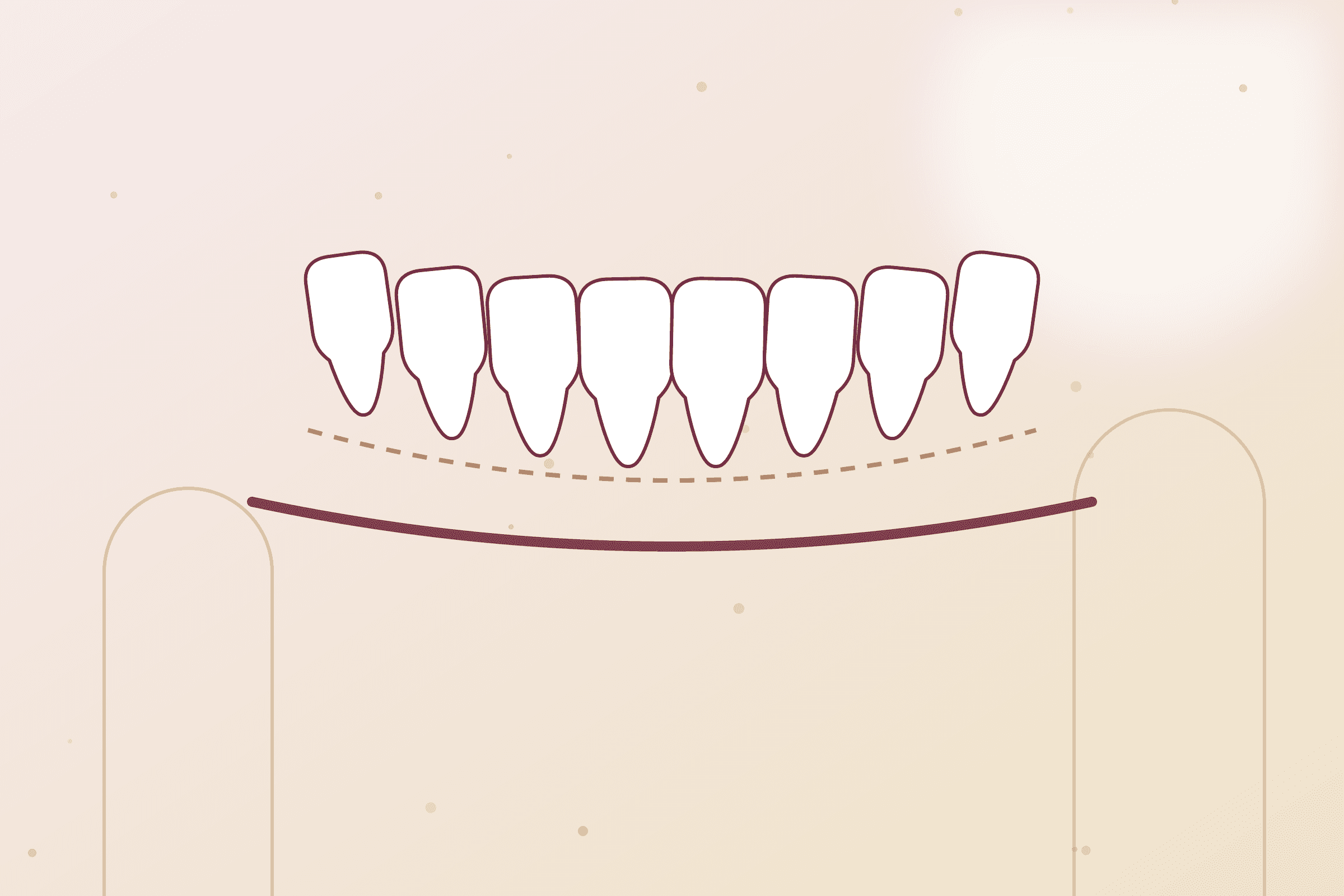
In conventional thinking the orthodontist first looks at the bite: how the teeth meet, where there is crowding. This is very important and it stays in the Pitts approach too. But in addition the question is asked: how should the teeth look when this person smiles? At what height should the front teeth be relative to the lip? How broad should the smile be? The plan starts from the answers to these questions, and tooth movement is built towards that goal.
Sometimes a good result is straight teeth. An exceptional result is a smile you cannot take your eyes off.
Aesthetic principles
| Principle | What it means |
|---|---|
| Smile arc | The edges of the upper teeth follow the curve of the lower lip |
| Height of the front teeth | At rest and when smiling the teeth look right for the age |
| Arch width | No large dark spaces at the sides when smiling |
| Gum display | The gum neither shows too much nor hides completely |
| Profile and lips | The position of the front teeth is chosen to suit the lips and profile |
I wrote about each of these principles separately: the smile arc, buccal corridors, gummy smile and lip fillers before orthodontic treatment.
The scientific basis
These principles are not a matter of subjective taste. The effect of front tooth position on the smile arc has been studied separately in the orthodontic literature, which stresses that the position of the front teeth must be planned in advance to preserve the smile arc during treatment. In research, orthodontists and laypeople rated a smile arc parallel to the lower lip and minimal buccal corridors as more attractive. A systematic review of how laypeople perceive smile aesthetics also shows that people sense these details without knowing their names.
How it looks in practice
- Diagnosis starts from the face: front and side photographs at rest and when smiling
- I measure the height of the front teeth relative to the lip and the smile arc
- Intraoral photographs, models and the necessary X-rays
- Plan: first the final smile, then the bite and movements that lead to it
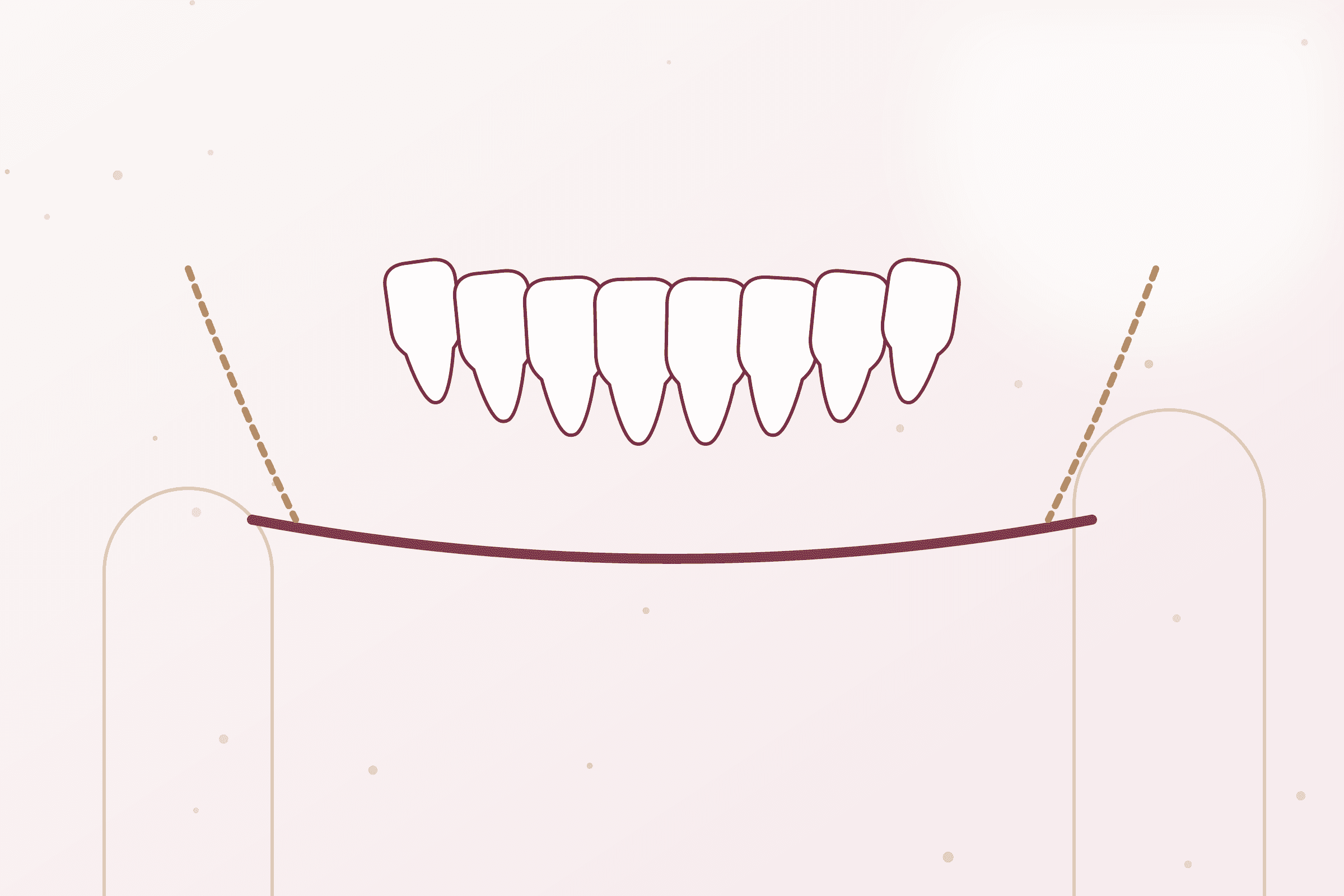
- Bracket height is chosen individually according to the smile arc
- Treatment with gentle, continuous forces
- In the finishing phase, adjustments to the details of the smile
Pitts21 Pro brackets
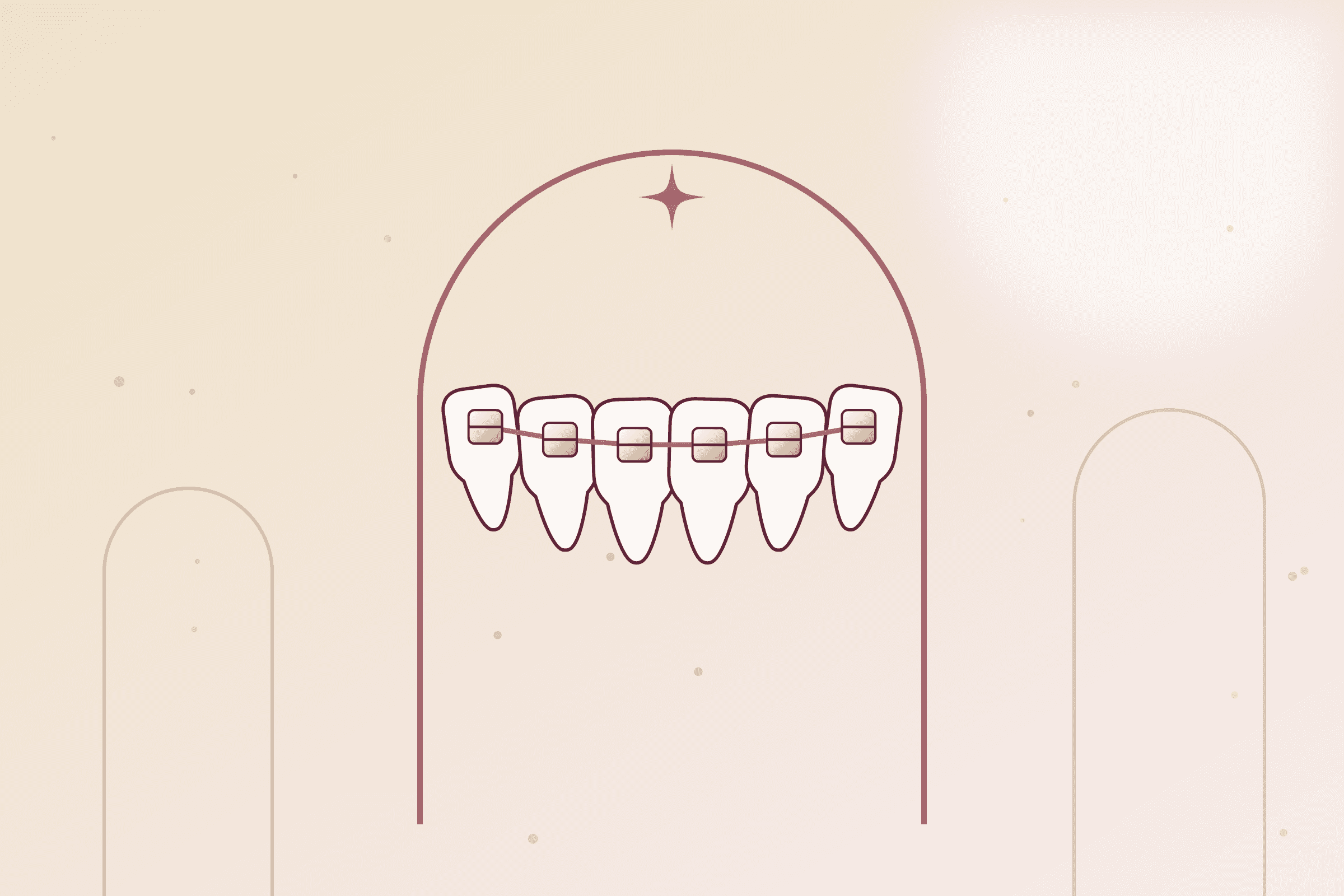
Together with the approach I mainly use the Pitts21 Pro bracket system. It allows me to work with gentle forces and to control the aesthetic position of the front teeth precisely. But what matters is not the bracket but the plan: the system is only a tool. About types of braces: types of braces.
What it means for the patient
- A more predictable result, because the goal is known in advance
- Attention to aesthetics as well as function
- Taking the profile, lips and facial features into account
- In many cases the option of treatment without extractions
- Fewer unnecessary movements
With the right diagnosis and plan, the changes are not limited to the smile. In some of our patients, the proportions, contour and symmetry of the face also became more harmonious after treatment. But I do not promise this to everyone: I explain the limits of how orthodontics affects the face in the article can orthodontics change your face.
Who this approach suits
Almost everyone: children, teenagers and adults. In children the growth period can be used to correct arch width and the relationship of the jaws. In adults it is especially useful in retreatment and before aesthetic restoration.
The difference from a conventional approach
| Question | A plan focused only on the teeth | The Pitts approach |
|---|---|---|
| Where the plan starts | From the bite and crowding | From the final smile and face, then the bite |
| Bracket position | Often by the middle of the tooth | Individually, according to the smile arc |
| Forces | Variable | Gentle and continuous |
| Finishing phase | Ends when the bite is corrected | Continues until the details of the smile are complete |
This comparison is not meant to make conventional orthodontics look bad. Many good orthodontists pay attention to aesthetics. The Pitts approach makes this attention systematic and includes it in the plan from day one.
What the science says
- Clinical paper (2001): the position of the front teeth determines the smile arc and must be planned in advance in treatment.
- Study (2006): orthodontists and laypeople find a smile arc parallel to the lower lip and minimal buccal corridors more attractive.
- Systematic review (2016): laypeople are sensitive to several aesthetic details of the smile.
More: smile and facial harmony. To assess your smile together, book a consultation.
Frequently asked questions
Is the Pitts philosophy a separate type of braces?
No. It is a treatment planning approach. The Pitts21 Pro bracket system works with it, but the plan is what matters.
Does treatment take longer with this approach?
No, on the contrary, a precise plan reduces unnecessary movements. Duration depends mainly on the complexity of the case and on cooperation.
Are Pitts principles applied with aligners too?
The aesthetic principles are the same and are considered in planning. But some fine movements, such as lengthening the front teeth, are easier to control with braces.
What is Pitts Masters Continuum?
A multi-stage professional training programme run by Dr. Tom Pitts’s team in the USA. I completed it in 2022-2024 as a member of the 9th cohort.
Related service
Scientific sources
The information in this article is based on the following peer-reviewed scientific articles and systematic reviews.
- Sarver, D. M. (2001). The importance of incisor positioning in the esthetic smile: the smile arc. American Journal of Orthodontics and Dentofacial Orthopedics, 120(2), 98-111. [PMID: 11500650] | [DOI: 10.1067/mod.2001.114301]
- Parekh, S. M., Fields, H. W., Beck, M., & Rosenstiel, S. (2006). Attractiveness of variations in the smile arc and buccal corridor space as judged by orthodontists and laymen. The Angle Orthodontist, 76(4), 557-563. [PMID: 16808559] | [DOI: 10.1043/0003-3219(2006)076[0557:AOVITS]2.0.CO;2]
- Parrini, S., Rossini, G., Castroflorio, T., Fortini, A., Deregibus, A., & Debernardi, C. (2016). Laypeople's perceptions of frontal smile esthetics: A systematic review. American Journal of Orthodontics and Dentofacial Orthopedics, 150(5), 740-750. [PMID: 27871700] | [DOI: 10.1016/j.ajodo.2016.06.022]