Types of braces: metal, ceramic and self-ligating
What materials and systems braces come in, what research says about self-ligating brackets and what matters more in the choice.

AuthorDr. Fidan AliyevaOrthodontist, Pitts Masters graduate

Short answer: by material, braces are metal or ceramic; by how the wire is held, they are conventional (with ligatures) or self-ligating. According to a systematic review, self-ligating brackets have not been shown to have a clinically significant advantage over conventional brackets in treatment time or effectiveness. The plan and its precise execution determine the result more than the type of bracket.
Patients often come with a bracket name they heard in an advert or from friends: "I need this brand because it is faster." In this article I explain the types of braces, their real differences and how I make the choice in my practice.
By material
| Metal | Ceramic | |
|---|---|---|
| Appearance | Visible | Tooth-coloured, less visible |
| Strength | Very strong | Strong, but can break on impact |
| Size | Smaller | May be slightly larger |
| Removal | Easy | Needs more careful removal |
| Who it suits | Any age, especially children | Teenagers and adults who value aesthetics |
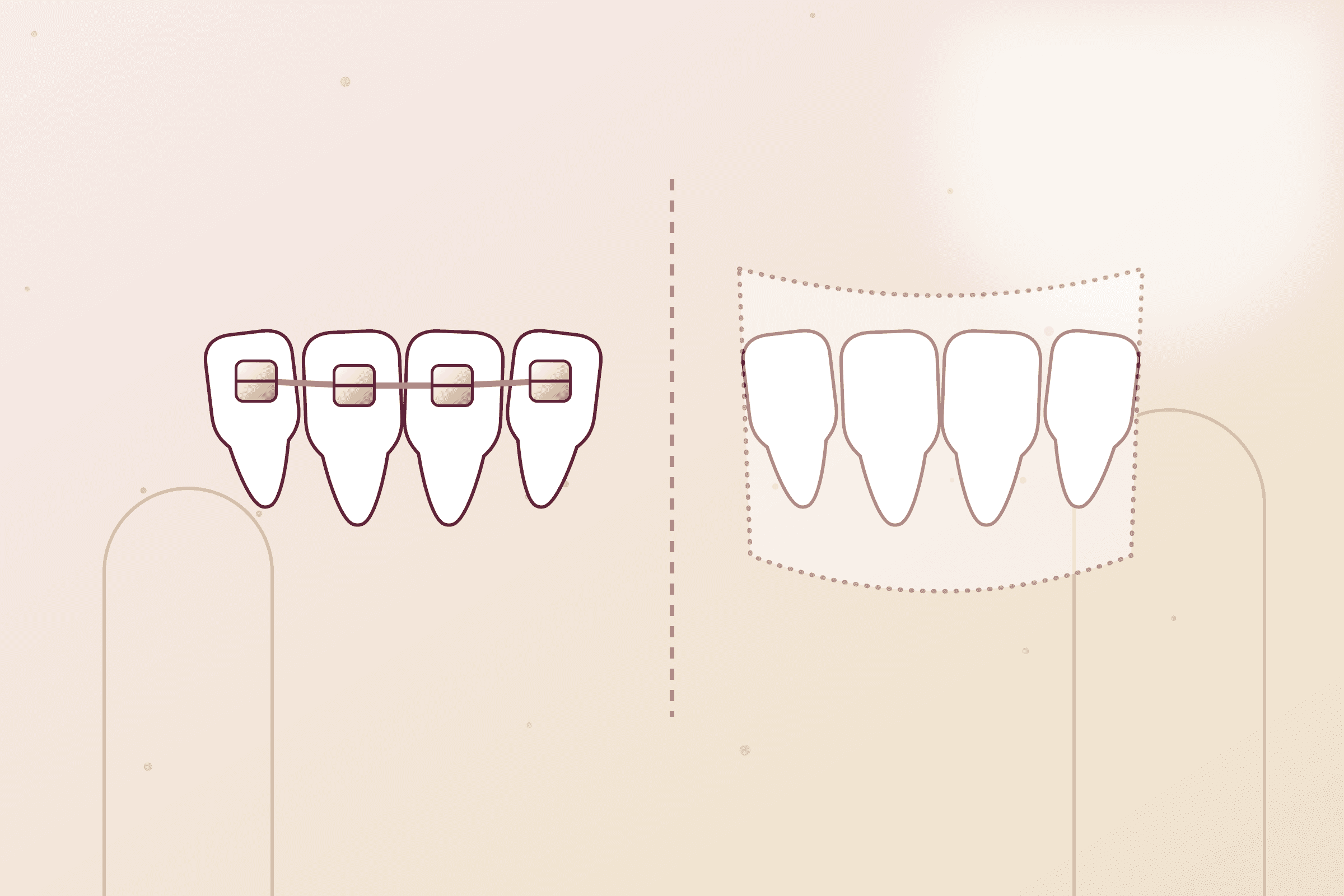
Sometimes we place ceramic brackets on the upper teeth and metal ones on the lower teeth: the lower teeth show little when smiling, and metal is more practical there.
By how the wire is held
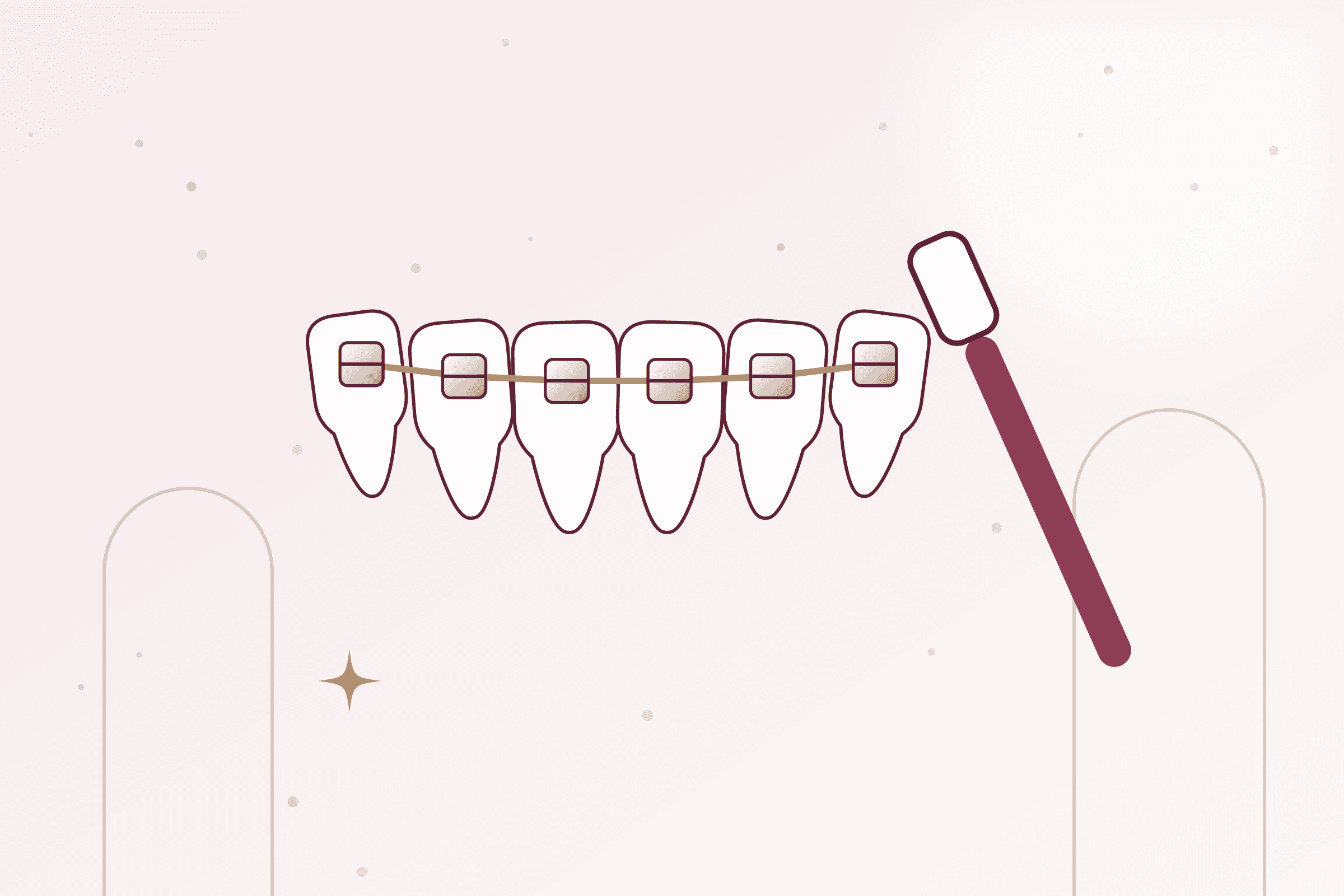
In conventional braces the wire is tied to the bracket with a small rubber or metal ligature. In self-ligating braces the bracket itself has a small door that holds the wire. This design aims to reduce friction and shorten visits slightly.
The "fast braces" claim
Self-ligating brackets are often presented as "faster" and "less painful". A systematic review tested these claims: no clinically significant difference from conventional brackets was found in treatment time, rate of alignment or pain. In some studies only chair time was slightly shorter.
This does not mean these brackets are bad. It means speed depends not on the bracket’s name but on the quality of the plan, the right choice of forces and the patient’s cooperation. More about duration: how long does orthodontic treatment take.
Why I work with Pitts21 Pro
I mainly use the Pitts21 Pro self-ligating bracket system developed on the basis of Dr. Tom Pitts’s approach. I did not choose it for a promise of "speed". I chose it because it works together with the Pitts philosophy: gentle forces, precise control of the aesthetic position of the front teeth and attention to the smile arc. More: what is the Pitts philosophy.
Why gentle force matters
Teeth do not move faster with strong force. On the contrary, according to a systematic review heavy forces are associated with a higher risk of root shortening, that is root resorption. Light, continuous forces are considered safer. More: orthodontics and root resorption.
Where the bracket sits matters more than its type
Even the best bracket will not move a tooth to the right place if it is not bonded in the right place. That is why bonding, that is attaching the brackets to the teeth, is one of the most important stages of treatment for me. I choose the height and angle of each bracket according to how the smile should look at the end. I also clean away small adhesive residues around the bracket, because they hold plaque.
What I look at when choosing
- Which movements are needed and how precisely they must be controlled
- Age and activity: for example children who play contact sports
- Aesthetic wishes and working life
- Hygiene habits
- Whether aligners are an alternative. See: braces or aligners
The bracket system and the wires
A bracket does not work alone: together with the wire it forms a system. At the start of treatment thin, flexible wires are used that align the teeth with gentle force. Later thicker, stiffer wires are used so that root position and the bite can be controlled precisely. The size and angle of the bracket slot and the sequence of wires together determine how treatment goes.
Daily life with braces
- Whatever the type of brackets, hard and sticky foods should be avoided
- With ceramic brackets it helps to rinse after coloured foods
- After each new wire there may be mild sensitivity for a few days
- An interdental brush is important for every type of bracket
The full list of daily rules is in the guide. Not the type of bracket but daily care determines the risk of white spots and gum inflammation.
What the science says
- Systematic review (2010): self-ligating brackets have not been shown to have a clear advantage over conventional brackets in treatment time, effectiveness or pain.
- Systematic review (2010): heavy forces are associated with more root resorption, light forces are safer.
The name of the bracket does not determine the result. The plan and attention to every detail do.
About daily life with braces: daily braces care guide. The treatment process is on the braces treatment page.
Frequently asked questions
Do ceramic brackets change colour?
The ceramic bracket itself usually keeps its colour, but rubber ligatures can stain from coffee, tea and coloured foods. Self-ligating systems have no ligatures.
Are there braces that go on the inside of the teeth?
Yes, lingual braces are bonded to the inner side of the teeth. They have their own advantages and limitations, and the choice is assessed individually.
Do self-ligating brackets reduce the number of visits?
The number of visits depends mainly on the plan and the mechanics. In some cases the intervals may be a little longer.
Are metal braces better for a child?
In children metal brackets are often a practical choice: small, strong and easy to remove. But the decision is still individual.
Related service
Scientific sources
The information in this article is based on the following peer-reviewed scientific articles and systematic reviews.
- Fleming, P. S., & Johal, A. (2010). Self-ligating brackets in orthodontics. A systematic review. The Angle Orthodontist, 80(3), 575-584. [PMID: 20050755] | [DOI: 10.2319/081009-454.1]
- Weltman, B., Vig, K. W., Fields, H. W., Shanker, S., & Kaizar, E. E. (2010). Root resorption associated with orthodontic tooth movement: a systematic review. American Journal of Orthodontics and Dentofacial Orthopedics, 137(4), 462-476. [PMID: 20362905] | [DOI: 10.1016/j.ajodo.2009.06.021]