Gummy smile: what causes it?
Four causes of showing too much gum when smiling, which of them an orthodontist can treat, the role of mini-screws and when another specialist is needed.

AuthorDr. Fidan AliyevaOrthodontist, Pitts Masters graduate
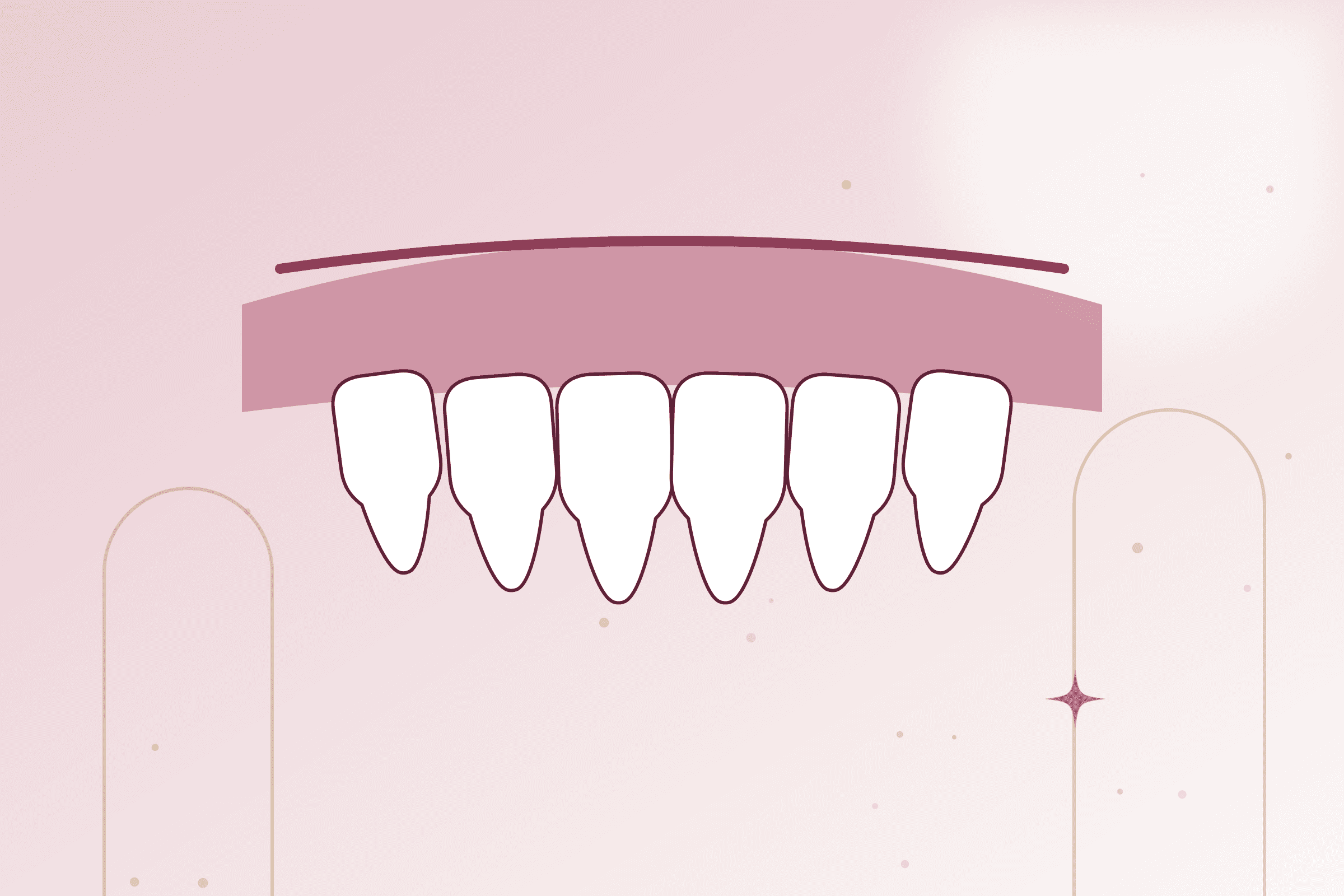
Short answer: a gummy smile means more gum than usual shows above the upper teeth when smiling. It has at least four different causes: short teeth, gums covering too much of the teeth, a very mobile upper lip, and upper teeth and jaw that have grown too far down. Treatment depends on the cause. If the cause lies in the position of the teeth, orthodontic treatment with mini-screws is an effective non-surgical option.
Some people worry about this a lot, press their lips together in photos or cover their mouth with a hand. But in itself it is not a reason to feel embarrassed or a must to change: a little gum showing is a natural part of a youthful, lively smile. If it bothers you, the first step is to find the cause. In this article I explain the causes, how each is recognised and when which approach is chosen.
How much gum counts as "too much"
There is no universal number. In the clinical literature more than about 3-4 millimetres of gum showing in a smile is often considered a gummy smile. But overall harmony matters more than the number: the shape of the lips, the length of the teeth, age and how you feel about it. Research shows that laypeople often see a few millimetres of gum as normal, while more starts to draw attention.
Four main causes
| Cause | How it is recognised | Main approach |
|---|---|---|
| Short teeth | The teeth look short compared with their width, the edges may be worn | Aesthetic restoration, sometimes with orthodontic preparation |
| Gum covers the tooth | The gum covers part of the crown, the teeth look "small" | Gum correction by a periodontist |
| Hypermobile upper lip | At rest everything is normal, but the lip rises very high when smiling | Lip-related methods, another specialist |
| Teeth and jaw too far down | The upper teeth show a lot even at rest, the lower face may be long | Orthodontic treatment, mini-screws, surgery in severe cases |
Often several of these causes are present together. Clinical reviews stress that the key to successful treatment is identifying the cause correctly: a method that works for one cause may not help another. For example, if the cause is in the jaw, trimming the gum does not solve the problem, it only makes the teeth look long.
How diagnosis is made
- I measure how much of the upper teeth shows between the lips at rest
- I record the amount of gum in a natural and a broad smile with photographs
- I look at the ratio of tooth width to length
- I assess the length of the upper lip and how high it rises when smiling
- I analyse the profile and vertical facial proportions, with an X-ray if needed
- I check the health and shape of the gums
When these measurements are compared, the cause becomes clear. That is why at the first visit I do not say "let’s fix it right away". First we determine what needs to change, where and by how much.
The orthodontic way: moving the teeth upwards
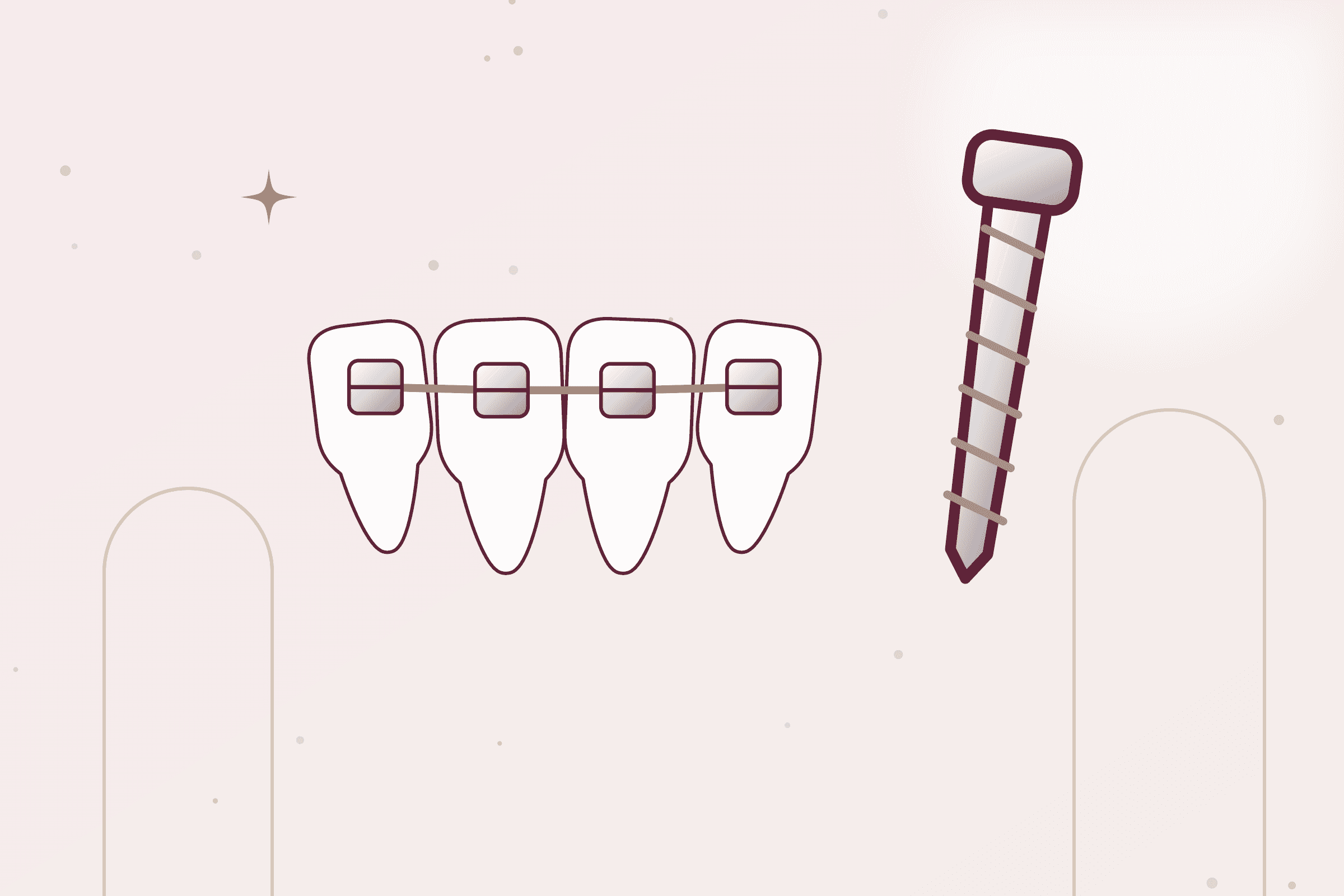
If the cause lies in the vertical position of the teeth and jaw, orthodontic treatment is the main method. Braces alone are limited in moving the front teeth upwards because the back teeth used as anchorage also move. This is where mini-screws help: they create a fixed point in the jawbone and allow the front teeth to be moved precisely upwards, in the direction of intrusion.
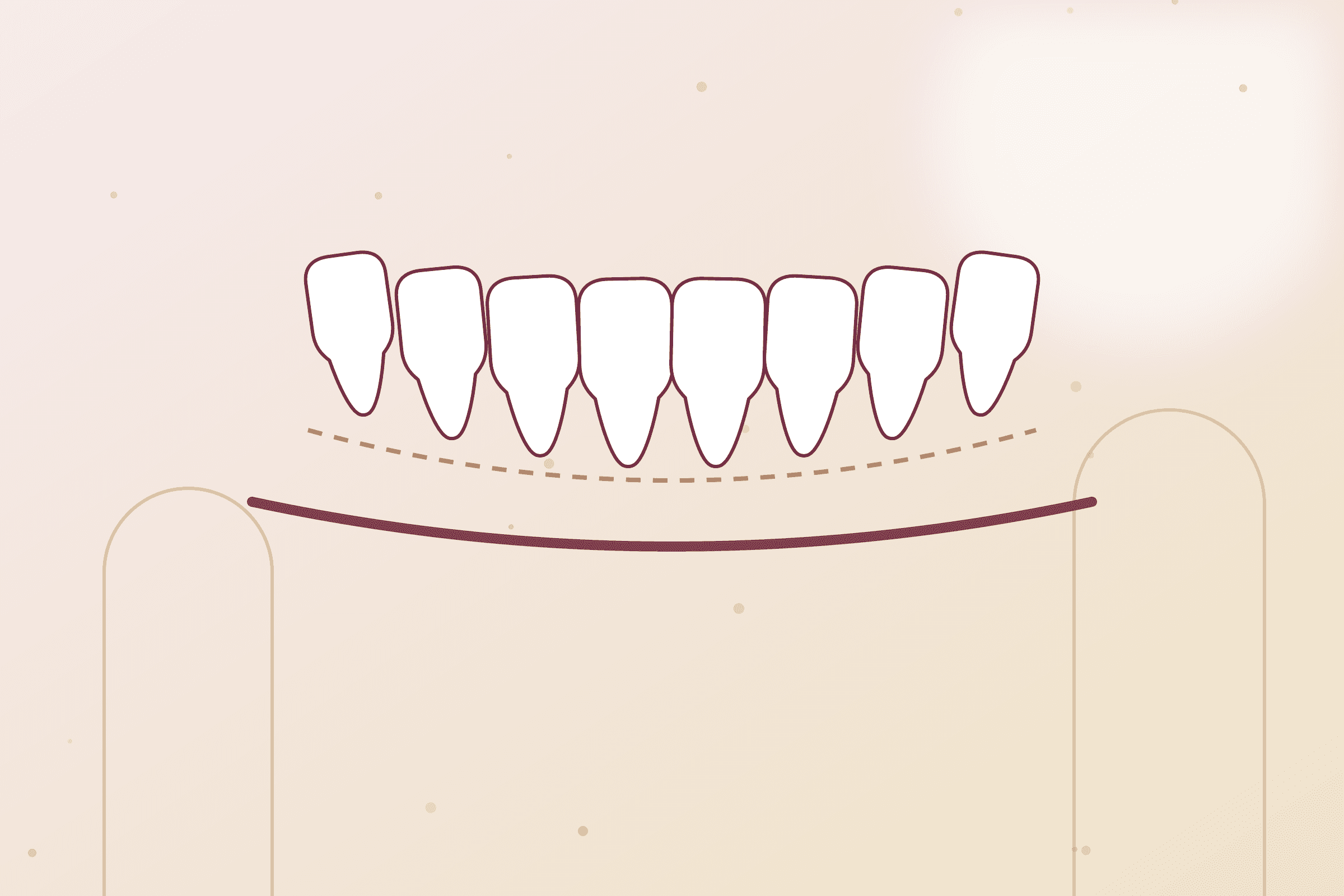
A systematic review shows that non-surgical correction of a gummy smile with mini-screws is effective. The gum moves up together with the tooth and shows less when smiling. When planning this movement I also consider the smile arc so that the front teeth do not end up looking too short. More: the smile arc.
When another specialist is needed
- If the gum covers part of the crown, a periodontist can correct the gum line
- If the teeth are short or worn, after the orthodontic phase a general dentist and a prosthodontist restore their shape
- If the cause is only the lip, lip-related methods are assessed by the relevant specialist
- With a severe vertical excess of the jaw, orthodontic treatment may be combined with jaw surgery
In these cases treatment is teamwork, and my role is to bring the teeth into the right position for the other stages. We plan in advance what each specialist will do so that you know the sequence.
Myths and facts
| Belief | Fact |
|---|---|
| A gummy smile is always a gum problem | The cause is often the position of the teeth and jaw or the movement of the lip |
| It can only be fixed with surgery | If the cause is in the teeth, orthodontic treatment with mini-screws is effective without surgery |
| The less gum shows, the better | A little gum showing is a natural part of a youthful smile |
| The same method suits everyone | The method depends on the cause, and several causes can be present together |
What treatment feels like
Mini-screws are placed under local anaesthesia and most patients feel only pressure. The intrusion phase takes a few months and the front teeth move upwards gradually. During this time I take photographs of the smile at every visit and compare the change with the plan so that the movement stops exactly where it should.
What the science says
- Clinical review (2020): a gummy smile has several causes and the treatment method should be chosen only after a correct diagnosis.
- Systematic review (2021): intrusion of the front teeth with temporary skeletal anchorage, that is mini-screws, effectively reduces a gummy smile without surgery.
How stable is the result
Like any orthodontic movement, the vertical position of the teeth must be maintained after treatment. That is why I plan retention specially in the final phase. I have a separate article on retainers: why retention matters.
The goal is not to hide the gum completely. The goal is a harmonious balance between the teeth, the gums and the lips.
If you want to find out your cause, see the gummy smile correction page or book a consultation.
Frequently asked questions
Can a gummy smile be corrected with braces alone?
If the cause lies in the vertical position of the teeth and jaw, orthodontic treatment is the main method and is often combined with mini-screws. If the cause is in the gum or the lip, another specialist is needed too.
Is placing a mini-screw painful?
It is done under local anaesthesia and takes a few minutes. There may be mild tenderness in the first days, which usually passes quickly.
Does a gummy smile change with age?
With age the upper lip drops slightly, so the gum usually shows less. But if the cause lies in the position of the teeth, it does not disappear on its own.
Is a gummy smile treated in children too?
In children the teeth have not fully erupted, so the gum may naturally show more. We decide with growth and the change of teeth in mind and often monitor first.
Related service
Scientific sources
The information in this article is based on the following peer-reviewed scientific articles and systematic reviews.
- Dym, H., & Pierre, R., 2nd (2020). Diagnosis and Treatment Approaches to a "Gummy Smile". Dental Clinics of North America, 64(2), 341-349. [PMID: 32111273] | [DOI: 10.1016/j.cden.2019.12.003]
- Alshammery, D., Alqhtani, N., Alajmi, A., Dagriri, L., Alrukban, N., Alshahrani, R., & Alghamdi, S. (2021). Non-surgical correction of gummy smile using temporary skeletal mini-screw anchorage devices: A systematic review. Journal of Clinical and Experimental Dentistry, 13(7), e717-e723. [PMID: 34306536] | [DOI: 10.4317/jced.58242]