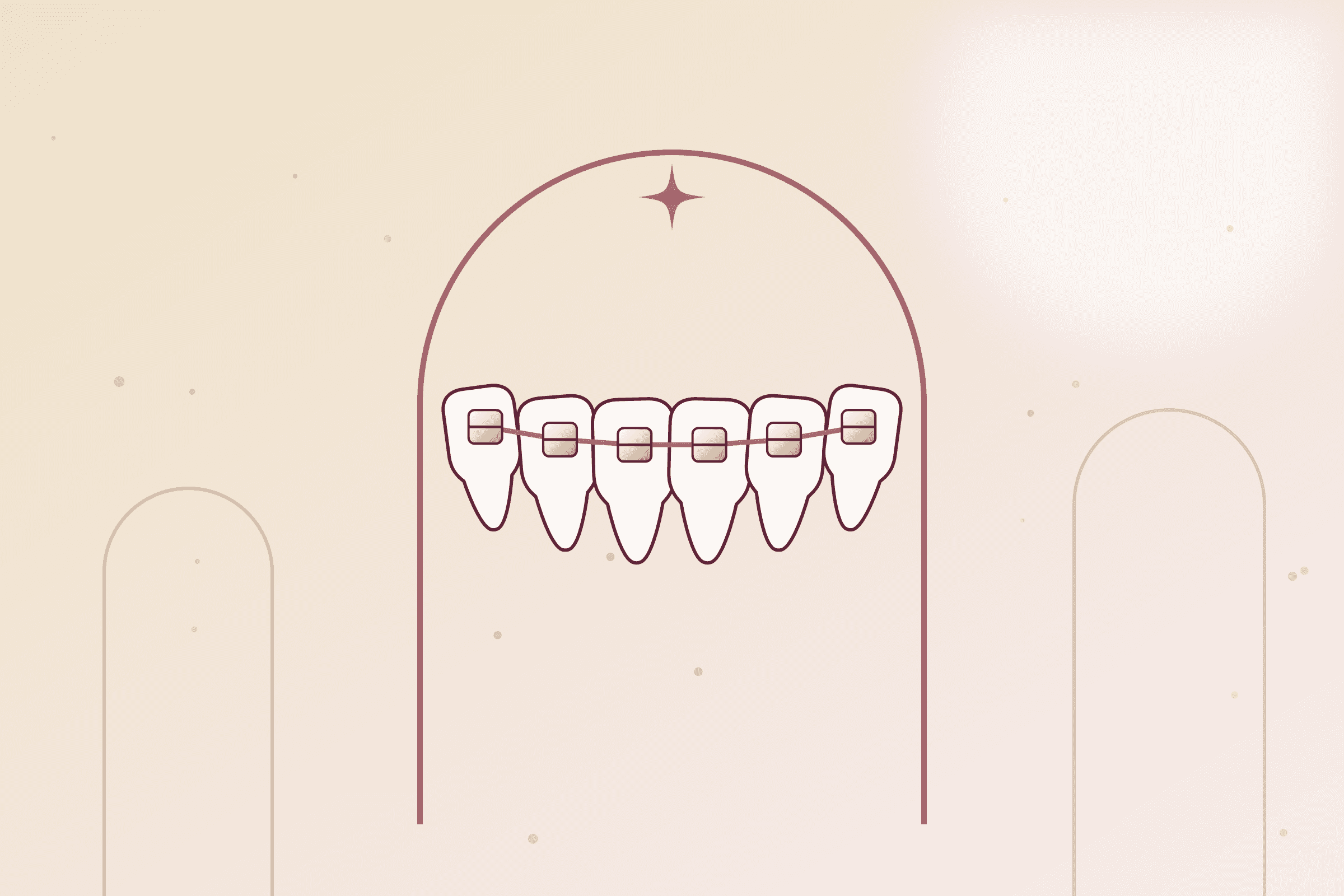
Can orthodontics change your face?
What braces and aligners can and cannot change in the face, the difference between children and adults and what research says.

AuthorDr. Fidan AliyevaOrthodontist, Pitts Masters graduate
Short answer: yes, to a certain extent. Orthodontic treatment changes the position of the front teeth, and since the lips rest on the teeth, they change too. This can affect the lip profile, the width of the smile and how easily the mouth closes. In children, the relationship of the jaws can also be influenced during growth. But in adults orthodontics does not change the size of the nose or the jawbones: for large skeletal differences jaw surgery may be needed.
"Before and after braces" face photos are shared widely on social media, and some create unrealistic expectations. In this article I explain honestly the real effect of orthodontics on the face, its limits and what I pay attention to in planning.
What can change
- The lip profile: when the front teeth are retracted the lips move back, when they come forward the lips may look fuller
- Lip closure: with protruding teeth the chin strains to bring the lips together, after treatment this eases
- The width and fullness of the smile
- How much tooth and gum shows when smiling
- Some asymmetries caused by the lower jaw shifting to the side
What cannot change
- The shape and size of the nose
- The size of the jawbones in adults
- Large skeletal asymmetries
- Age-related changes in the cheeks and skin
When there is a large difference in jaw size in adults, orthodontic treatment can be combined with jaw surgery. In that case my job is to bring the teeth into the right position for surgery and then complete the bite.
The difference in children
In children the jaws are still growing, and this is a great opportunity. According to a Cochrane review, in children with prominent upper front teeth early treatment reduces the risk of injury to these teeth. In children with a prominent lower jaw some appliances have been shown to improve the relationship of the jaws in the short term. But evidence on long-term results is still limited. More: when the lower jaw sticks out and when should a child first see an orthodontist.
Do extractions change the face
This is one of the questions that worries people most. A systematic review shows that in treatment with extractions the lips move back more and the profile becomes flatter than in treatment without extractions. For some people this is good, for example a patient whose lips protrude a lot and whose mouth is hard to close. For others it may flatten the profile unnecessarily.
| Profile | With extractions | Without extractions |
|---|---|---|
| Lips protrude a lot, the mouth is hard to close | May improve the profile | The lips may stay protrusive |
| Lips are balanced | May flatten the profile | Often the better choice |
| Thin lips, flat profile | May flatten the profile further | More suitable |
That is why I do not decide on extractions by looking at the teeth alone; I always consider the profile and lips. See: non-extraction treatment.
How facial harmony is planned
In the Pitts philosophy the plan starts from the face: the profile, the lips, the smile arc and the arch width. With the right diagnosis and plan, the changes are not limited to the smile. In some of our patients, the proportions, contour and symmetry of the face also became more harmonious after treatment. More: what is the Pitts philosophy.
How to set expectations
- At the consultation I look at your facial photos and explain possible changes
- I also say openly what orthodontics cannot solve
- Photos on social media may differ in angle, light and expression, so do not compare them directly
- Make decisions about lip aesthetics after the orthodontic result. See: lip fillers before orthodontic treatment
How comparison with photographs is done
To assess the effect of treatment on the face objectively, you need photographs taken under the same conditions: the same distance, the same light, the same head position and the same expression. That is why I take standard photographs at the start and end of treatment. In "before and after" photos on social media, differences in angle, light, make-up and even weight loss have a big effect.
Who notices the change most
- Patients whose front teeth and lips protrude a lot and whose mouth does not close comfortably
- Cases where a lot of gum shows when smiling
- Cases where the smile looks "empty" because of a narrow arch
- Children in whom the relationship of the jaws is corrected during growth
In a patient whose teeth are slightly crooked but whose profile is balanced, the change in the face is small and the main difference shows in the smile.
What the science says
- Systematic review and meta-analysis (2018): in treatment with extractions the lips move back more than in treatment without extractions.
- Cochrane review (2018): in children with prominent upper front teeth early treatment reduces the risk of trauma to the front teeth.
I do not try to "change" the face. I try to fit the smile to the face.
More: smile and facial harmony. To build a plan that suits your face together, book a consultation.
Frequently asked questions
Do the cheeks sink after braces?
Orthodontic treatment does not directly change the soft tissue of the cheeks. Temporary weight loss during treatment or age-related changes can create this impression.
Can orthodontics make the chin more prominent?
In children the relationship of the jaws can be influenced during growth. In adults changing the size of the jawbone may require surgery.
Will an asymmetry be corrected?
An asymmetry caused by the teeth and bite often improves. A skeletal asymmetry may need additional treatment.
Can my profile get worse after treatment?
In well planned treatment the profile is assessed in advance to reduce this risk. That is exactly why I am careful about extraction decisions.
Related service
Scientific sources
The information in this article is based on the following peer-reviewed scientific articles and systematic reviews.
- Konstantonis, D., Vasileiou, D., Papageorgiou, S. N., & Eliades, T. (2018). Soft tissue changes following extraction vs. nonextraction orthodontic fixed appliance treatment: a systematic review and meta-analysis. European Journal of Oral Sciences, 126(3), 167-179. [PMID: 29480521] | [DOI: 10.1111/eos.12409]
- Batista, K. B., Thiruvenkatachari, B., Harrison, J. E., & O’Brien, K. D. (2018). Orthodontic treatment for prominent upper front teeth (Class II malocclusion) in children and adolescents. Cochrane Database of Systematic Reviews, 3(3), CD003452. [PMID: 29534303] | [DOI: 10.1002/14651858.CD003452.pub4]