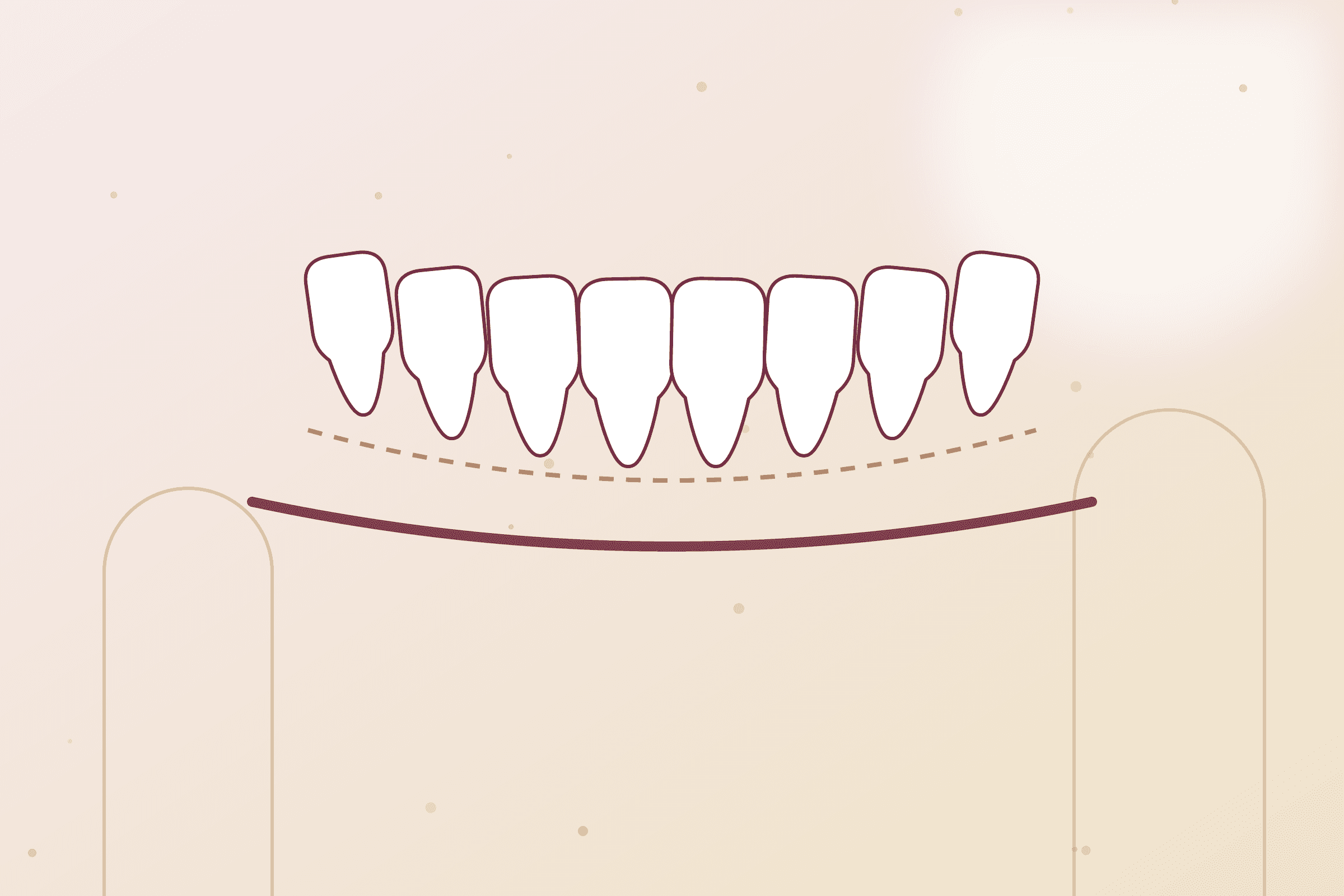
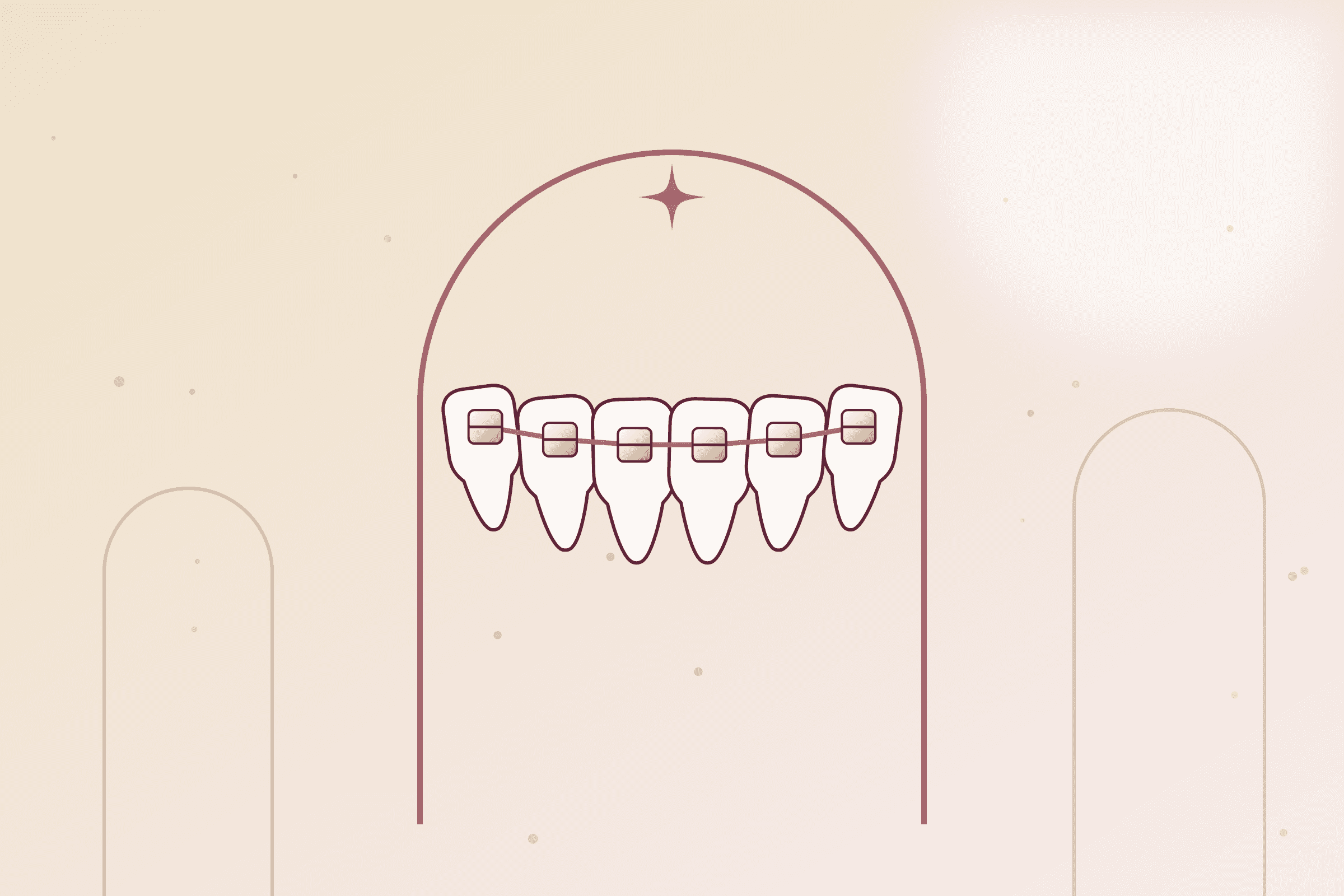
Dark spaces at the sides of the smile: buccal corridors
What the dark spaces at the corners of the mouth are, which smile people choose in research and how orthodontic treatment can change them.

AuthorDr. Fidan AliyevaOrthodontist, Pitts Masters graduate
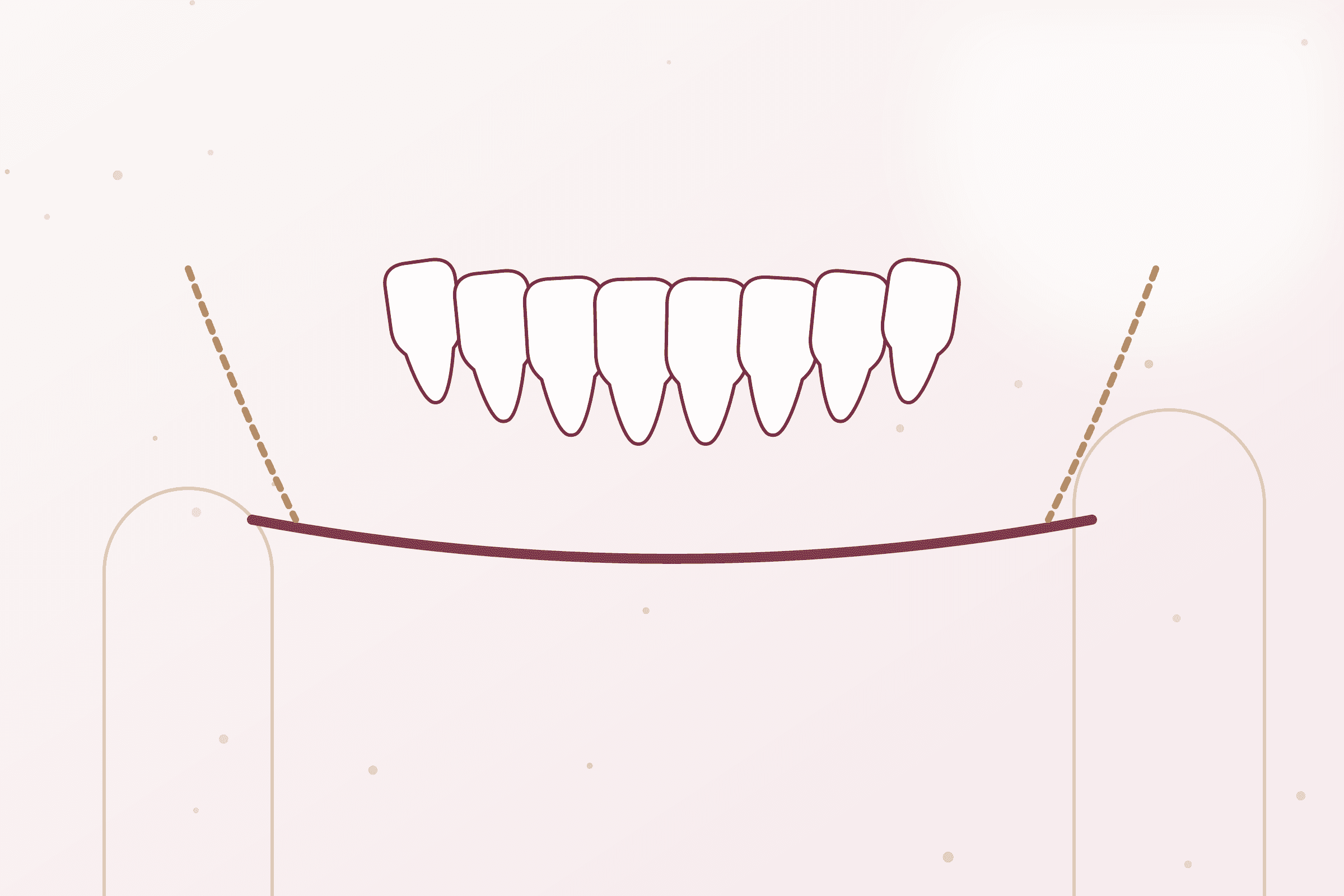
Short answer: buccal corridors are the dark spaces seen between the side teeth and the corners of the mouth when smiling. When they are large, the smile can look narrow and "empty". In research both orthodontists and laypeople found a broader smile with little dark space at the sides more attractive. The most common cause is a narrow upper dental arch or side teeth tipped inwards, and this can be improved orthodontically.
Sometimes a person sees that their teeth are straight, but their smile still looks "incomplete" for some reason. The reason is often at the sides: dark spaces appear near the corners of the mouth when smiling. In this article I explain what they are and when they need correcting.
What a buccal corridor is
When you smile, the lips open sideways. The closer the side teeth, the premolars and molars, are to the corners of the lips, the fuller the smile looks. If there is space between the teeth and the corners of the mouth, it stays in shadow and looks dark. A little dark space is natural and gives depth to the smile. A problem arises only when these spaces are large.
What people choose
In one study orthodontists and laypeople were asked to rate smiles with different smile arcs and buccal corridor sizes. Both groups found broad smiles with minimal buccal corridors more attractive. A systematic review of how laypeople perceive smile aesthetics also shows that buccal corridors are among the factors that affect how a smile is judged, but their effect has to be assessed together with other factors.
Causes
| Cause | What happens |
|---|---|
| Narrow upper jaw | The dental arch is narrow relative to the lips |
| Side teeth tipped inwards | The teeth are there, but tipped inwards and in shadow |
| Narrow arch after extractions | In some cases the arch may stay narrow |
| Broad smile | The lips open very wide and the teeth stay behind |
| Upper jaw set back | The arch sits behind the corners of the mouth |
What orthodontic treatment can do
- Bring side teeth tipped inwards to the right angle
- Shape the dental arch correctly: from a narrow "V" to a broad "U"
- Widen a narrow upper jaw in children during growth. See: palatal expansion
- Take arch width into account when deciding on extractions
The goal here is not to widen the arch as much as possible. The teeth must stay within the bone, otherwise the risk of gum recession may increase. So I change the arch width only as far as the bone and gums allow.
Does everyone need a broad smile
No. The "right" size of buccal corridors depends on the shape of the face, the width of the lips and the nature of the smile. An overly broad arch may not look natural on a narrow face. So I assess the smile as a whole: the smile arc, how much gum shows, the midline and the profile together.
Diagnosis
Buccal corridors cannot be assessed inside the mouth alone. So I take front photographs of a natural and a broad smile and analyse the arch shape on dental models. This view is part of the Pitts philosophy: the plan starts from how the smile will look at the end.
Myths and facts
| Belief | Fact |
|---|---|
| Dark spaces are linked to tooth colour | They depend mainly on the arch shape and the angle of the side teeth |
| The broader the arch, the better | The arch must suit the face and lips, too much width does not look natural |
| This can only be fixed with veneers | If the cause is the position of the teeth, the orthodontic route is more conservative |
| Extractions always make the smile narrower | In well planned treatment the arch shape is preserved |
Balance in planning
Along with the width of the arch I also look at its shape. In a narrow "V" shaped arch the front teeth stick out while the side teeth stay back in shadow. A broad, rounded "U" shaped arch makes the smile look full. But the arch shape must also be in balance with the pressure of the tongue, lips and cheeks, otherwise the result will not stay stable. So when I widen the arch I plan retention especially carefully.
What the science says
- Study (2006): orthodontists and laypeople found a broad smile with minimal buccal corridors and a smile arc parallel to the lower lip more attractive.
- Systematic review (2016): laypeople are sensitive to several factors when judging a smile, including buccal corridors, but these factors act together.
A smile is not made only by the teeth you see from the front. The sides are part of it too.
You can read about the width and harmony of your smile on the smile and facial harmony page or book a consultation.
Frequently asked questions
Can buccal corridors be fixed with veneers or crowns?
In some cases restorations can widen the smile, but if the cause is a narrow arch or tipped teeth, assessing the orthodontic route first is the more conservative approach.
Can the arch be widened in adults?
In adults the jawbone no longer grows, but the arch can be widened to some extent by correcting the angle of the side teeth. The limit is set by the condition of the bone and gums.
Do extractions make the smile narrower?
Not always. In well planned treatment the arch shape is preserved. But I always take smile width into account when deciding on extractions.
When is this easier to correct in children?
A narrow upper jaw is easier to widen during growth. That is why I recommend an orthodontic check from age 6.
Related service
Scientific sources
The information in this article is based on the following peer-reviewed scientific articles and systematic reviews.
- Parekh, S. M., Fields, H. W., Beck, M., & Rosenstiel, S. (2006). Attractiveness of variations in the smile arc and buccal corridor space as judged by orthodontists and laymen. The Angle Orthodontist, 76(4), 557-563. [PMID: 16808559] | [DOI: 10.1043/0003-3219(2006)076[0557:AOVITS]2.0.CO;2]
- Parrini, S., Rossini, G., Castroflorio, T., Fortini, A., Deregibus, A., & Debernardi, C. (2016). Laypeople's perceptions of frontal smile esthetics: A systematic review. American Journal of Orthodontics and Dentofacial Orthopedics, 150(5), 740-750. [PMID: 27871700] | [DOI: 10.1016/j.ajodo.2016.06.022]