The smile arc: straight teeth are not everything
How the edges of the upper teeth follow the lower lip, which smile people chose in research and what this changes in treatment.

AuthorDr. Fidan AliyevaOrthodontist, Pitts Masters graduate
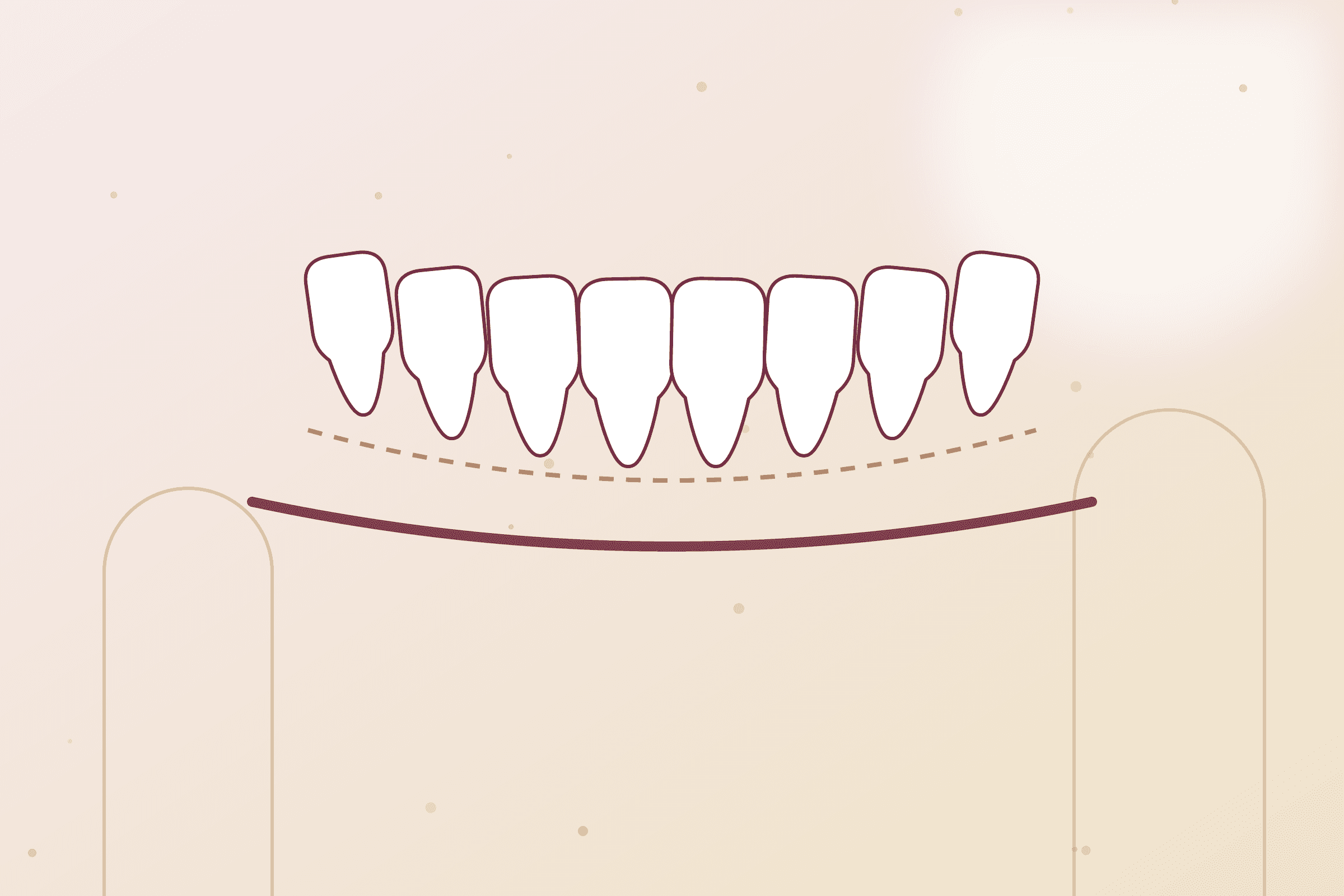
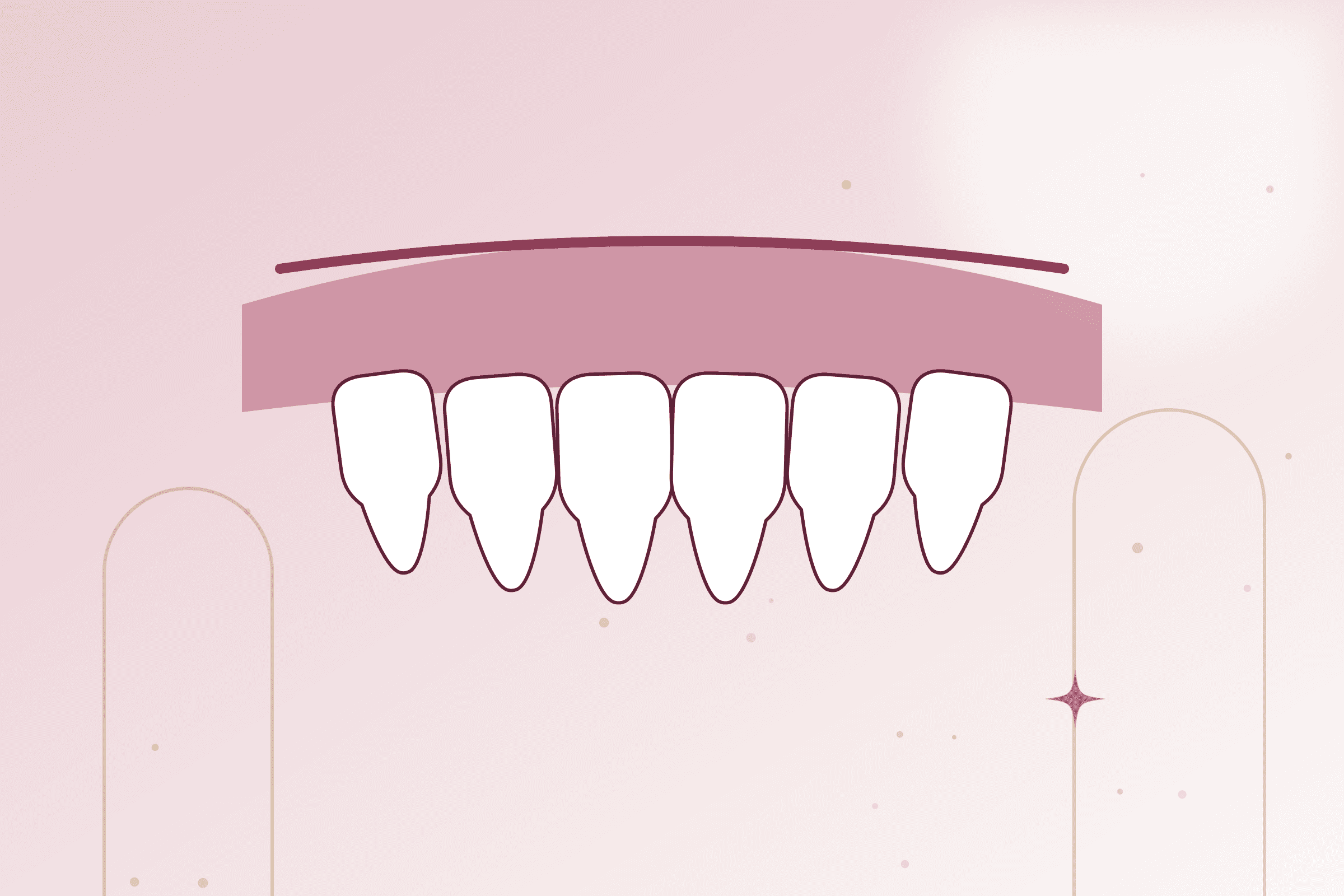
Short answer: the smile arc is the way the edges of the upper teeth follow the curve of the lower lip when you smile. When this line runs parallel to the lower lip, the smile looks soft, natural and youthful. When the line is flat or curves the other way, the smile can look harsher even if the teeth are perfectly straight. Orthodontic treatment can either improve or flatten this arc, so it is considered carefully in planning.
When people talk about a beautiful smile, most think only of straight teeth. But the eye does not see teeth one by one; it sees a whole composition: the line of the teeth, the lips, the gums and the face. In this article I explain what the smile arc is, what science says about it and what it changes in treatment.
What a smile arc looks like
Smile naturally in front of a mirror and imagine a line joining the edges of your upper teeth. When the front incisors sit slightly lower than the side teeth, the line forms a gentle downward curve that runs parallel to the curve of the lower lip. This is a "consonant" smile arc. If the front teeth are short or have moved upwards, the line flattens. Sometimes it even curves the opposite way.
| Type | What it looks like | Impression |
|---|---|---|
| Consonant (parallel) | The line of the teeth follows the lower lip | Soft, youthful, natural |
| Flat | The edges of the teeth lie almost on a straight line | Harsher, older |
| Reverse | The front teeth look shorter than the side teeth | Not harmonious |
Not only orthodontists notice it
In studies, orthodontists and people with no connection to dentistry were asked to rate different smiles. Both groups found a smile arc parallel to the lower lip the most attractive and a flat arc less attractive. In other words, people sense this concept intuitively without knowing its name.
A systematic review of how laypeople perceive smile aesthetics also shows that not only straight teeth matter, but also how much gum shows, the midline, dark spaces at the sides and tooth size. I explain these details in separate articles: gummy smile and dark corridors when smiling.
How the arc changes during treatment
During orthodontic treatment the height and angle of the front teeth change. The height at which brackets are bonded to the teeth is the position the teeth reach at the end of treatment. If brackets are placed only on a "straight line" principle, the smile arc can flatten. Sarver’s classic paper also stresses that the position of the front teeth must be planned in advance to preserve or improve the smile arc.
What I look at in planning
- How much tooth and gum show in a natural smile
- The relationship of the front teeth to the lower lip
- The mobility of the upper lip
- Tooth size and shape, short or worn teeth
- The width of the dental arch and dark spaces at the sides
- The profile and overall facial proportions
For this I take photographs of the face and the smile, because a lot that cannot be seen inside the mouth shows on a photo. When I place brackets, I choose the height of the front teeth according to the smile arc. This approach is the basis of the Pitts philosophy.
What can spoil the smile arc
- Worn or shortened front teeth, for example from grinding
- Moving the front teeth too far upwards during treatment
- Placing brackets only according to the middle of the teeth
- Short teeth left without aesthetic restoration
Does everyone need the same arc
No. The smile arc is assessed individually according to each person’s lips, age and facial structure. The goal is not a template smile but a result that suits your face. Sometimes after the orthodontic phase the shape of the teeth needs to be completed with aesthetic restoration, and we plan this together.
How we measure the smile arc
The smile arc can be judged by eye, but planning needs a more precise method. So I ask the patient to smile naturally and take a front photograph from the same distance. Then I compare the line joining the edges of the upper incisors, canines and premolars with the curve of the lower lip. If the lines are parallel, the arc is consonant. If the line is flat or reversed, I look for the reason: the height of the front teeth, their angle, wear or tooth size.
A natural smile matters. A "forced" smile for the camera changes the position of the lips and gives a misleading result. That is why I sometimes take several photographs and a short video and choose the natural smile that appears during conversation.
Which tools are used in treatment
| Step | What it does |
|---|---|
| Choosing bracket height | Determines where the front teeth will end up relative to the lower lip |
| Adjusting the archwire | Fine-tunes the vertical position of the teeth |
| Mini-screws | Precisely move the front teeth upwards or the back teeth when needed |
| Finishing phase | Completes the arc with small adjustments |
| Aesthetic restoration | Restores the shape of short or worn teeth |
The order matters here. If the teeth are short and restoration is planned, during the orthodontic phase I bring the teeth to a position where the later restoration can be minimal and natural. We plan this together with a general dentist or prosthodontist.
Age and the smile arc
With age the upper lip drops slightly, the front teeth wear and show less when smiling. This gradually flattens the smile arc. One of the main signs of a youthful smile is well visible front teeth and a gently curved arc. So when planning the arc in adult patients I also consider age-related changes: the goal is a smile that looks natural but not "tired".
What the science says
- Clinical paper (2001): the position of the front teeth determines the smile arc and must be planned in advance to preserve the arc during orthodontic treatment.
- Study (2006): orthodontists and laypeople rated a smile arc parallel to the lower lip as the most attractive and a flat arc as less attractive.
Sometimes a good result is straight teeth. An exceptional result is a smile you cannot take your eyes off.
If you want to know how your smile fits your face, see the smile and facial harmony page or book a consultation.
Frequently asked questions
Can the smile arc be corrected with braces alone?
If the cause lies in the position of the teeth, yes. If the teeth are short or worn, aesthetic restoration may also be needed after the orthodontic phase.
Can the smile arc be controlled with aligners?
In some cases yes, but movements such as lengthening teeth are less predictable with aligners. We choose after diagnosis.
Does the smile arc change with age?
Yes. With age the lips drop and the teeth wear, so the arc tends to flatten. This is one reason why a well planned arc makes a smile look younger.
How can I check my own smile arc?
Smile naturally in front of a mirror and see whether the edges of your upper teeth run parallel to the curve of your lower lip. We make an accurate assessment with photographs at the consultation.
If my smile arc is flat, do I definitely need treatment?
No. This is an aesthetic detail, not a health problem. If it bothers you or orthodontic treatment is planned anyway, we include improving the arc in the plan.
Related service
Scientific sources
The information in this article is based on the following peer-reviewed scientific articles and systematic reviews.
- Sarver, D. M. (2001). The importance of incisor positioning in the esthetic smile: the smile arc. American Journal of Orthodontics and Dentofacial Orthopedics, 120(2), 98-111. [PMID: 11500650] | [DOI: 10.1067/mod.2001.114301]
- Parekh, S. M., Fields, H. W., Beck, M., & Rosenstiel, S. (2006). Attractiveness of variations in the smile arc and buccal corridor space as judged by orthodontists and laymen. The Angle Orthodontist, 76(4), 557-563. [PMID: 16808559] | [DOI: 10.1043/0003-3219(2006)076[0557:AOVITS]2.0.CO;2]