After braces come off: why retention matters
Why teeth move back, types of retainers, when each is chosen, what science says and what to remember to protect the result.

AuthorDr. Fidan AliyevaOrthodontist, Pitts Masters graduate
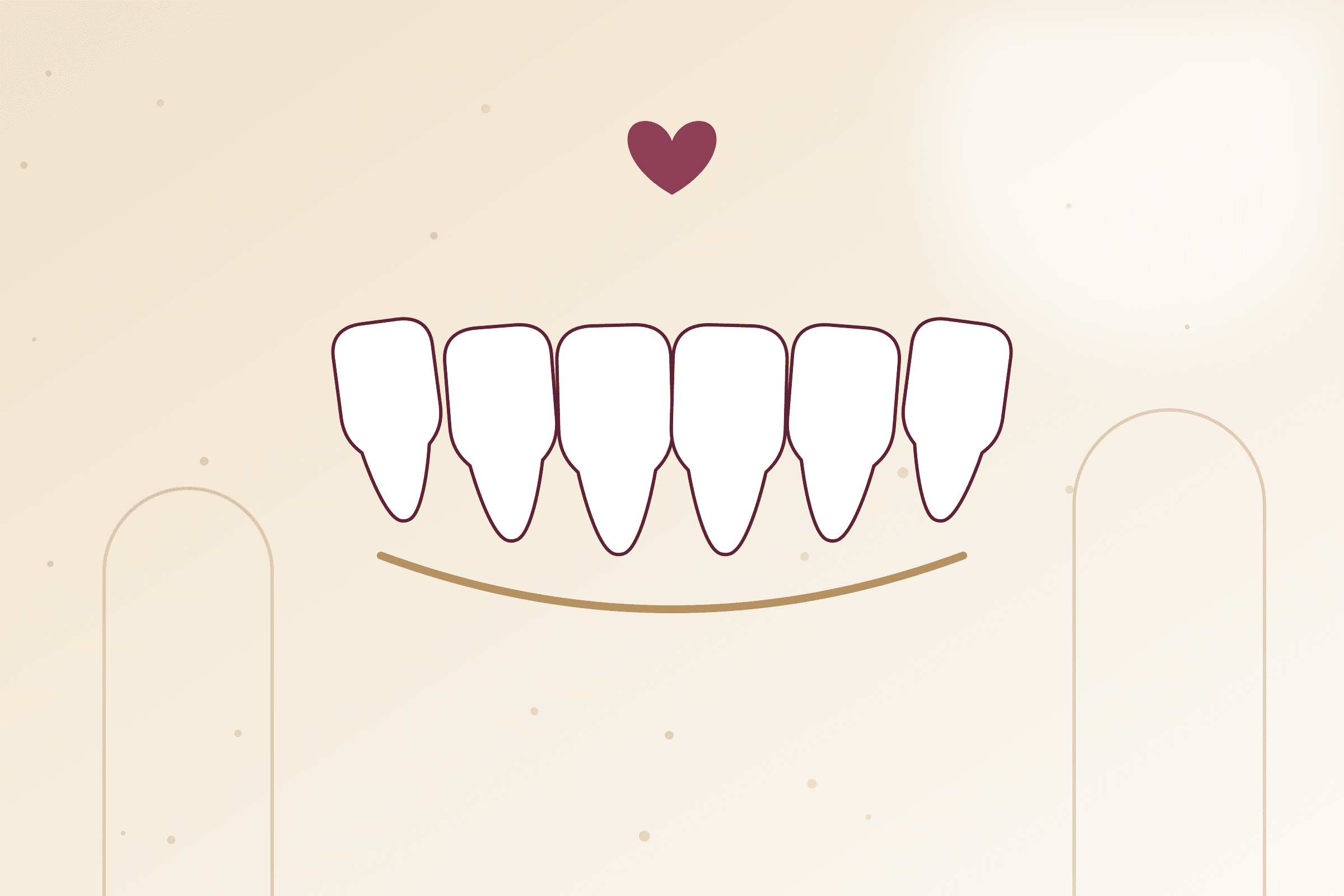
Short answer: after braces or aligners are removed, teeth tend to move back towards their old position, because the surrounding tissues need time to adapt and teeth move slowly throughout life. A retainer prevents this relapse. The choice between a fixed and a removable retainer is individual; the main rule is to wear it as recommended for a long time.
The day the braces come off is a very happy one. But treatment does not end there. The next stage, retention, is at least as important as active treatment for protecting the result. In most patients who come for retreatment the reason is exactly this: the retainer was not worn or was stopped too early.
Why teeth move back
- The gum fibres "remember" the previous position for a while and pull the teeth back
- The bone around the tooth needs time to adapt to the new position
- The tongue, lips and cheeks constantly press on the teeth
- Teeth move slowly throughout life, even in people who have never had treatment
- Growth continues for some time after adolescence
That is why some relapse without retention is very much to be expected. Rotated teeth, gaps between the front teeth and crowding of the lower front teeth are especially prone to coming back.
Types of retainers
| Type | Advantage | What to watch |
|---|---|---|
| Fixed retainer | Invisible, impossible to forget | Clean around it carefully, check that it has not come loose |
| Clear retainer | Invisible, covers all teeth, removable | Wear as instructed, replace over time |
| Plate retainer | Sturdy, minor adjustments possible in some cases | May affect speech a little, wear as instructed |
Sometimes I recommend two types together: for example, a fixed retainer on the lower front teeth and a clear retainer worn at night on the upper teeth.
Which is better
According to a Cochrane systematic review, there is not yet strong enough evidence to say which retainer is best for everyone. So I choose the type of retainer and the wearing schedule individually for each patient: I consider the initial problem, the type of bite, the state of the gums and the patient’s lifestyle. For example, if there was a large gap between the front teeth or the teeth were very rotated, a fixed retainer may be more reliable.
How long retention lasts
In the first months the retainer is worn more, then gradually only at night. Because teeth move throughout life, I recommend that those who want to fully protect the result wear the retainer at night for a long time, sometimes for years. A fixed retainer can stay in place for years if it is well looked after.
Are wisdom teeth to blame
Wisdom teeth are often blamed for crowding of the lower front teeth. Research does not clearly confirm this link. More: wisdom teeth and braces.
What to remember
- Wear the retainer as recommended and do not stop on your own
- Clean the clear retainer every day and do not put it in hot water, it can lose its shape
- Clean around the fixed retainer with floss or a small brush
- If the retainer breaks, comes loose or the clear retainer starts to feel tight, message me without delay
- Come to check-up visits, the first year is especially important
- Always take the retainer with you when travelling
If the teeth have already moved back
Minor relapse can sometimes be corrected by wearing the retainer again or with a short course of aligners. Larger changes may need retreatment. More: orthodontic retreatment.
Caring for your retainer
| Retainer | How to clean |
|---|---|
| Fixed retainer | Every day with an interdental brush or floss threader, especially behind the lower front teeth |
| Clear retainer | With a soft brush and cold or lukewarm water, kept in its case |
| Plate retainer | Gently with a brush, kept in its case so it does not break |
Do not scrub clear retainers and plates hard with toothpaste: it scratches the surface and makes the retainer cloudy. Do not leave a clear retainer in hot water, in the sun in a car or near a radiator, as it loses its shape.
Visits during retention
In the first year after active treatment I plan several check-ups: I check that the teeth are stable, the condition of the retainer and the gums. In later years visits become less frequent. If the clear retainer starts to feel tight, you feel the fixed retainer coming loose or notice changes in your teeth, do not wait for the next visit.
What the science says
- Cochrane review (2023): different types of retainers and wearing schedules have been compared, but the certainty of evidence about which is better for everyone is low.
Treatment creates the result, retention protects it.
Frequently asked questions
How long should I wear a retainer?
More in the first months, then at night. To protect the result long term, I recommend continuing to wear it at night for years.
Does a fixed retainer harm the teeth?
Not if it is cleaned well. Use floss or a small brush so that plaque does not build up around it.
What should I do if I lose my retainer?
Message me as soon as possible. The teeth can move until a new retainer is made, so do not delay.
My retainer came loose. Can I glue it back myself?
No. We repair a loose or broken fixed retainer in the clinic; message me so we can plan a time.
Related service
Scientific sources
The information in this article is based on the following peer-reviewed scientific articles and systematic reviews.
- Martin, C., Littlewood, S. J., Millett, D. T., Doubleday, B., Bearn, D., Worthington, H. V., & Limones, A. (2023). Retention procedures for stabilising tooth position after treatment with orthodontic braces. Cochrane Database of Systematic Reviews, 5(5), CD002283. [PMID: 37219527] | [DOI: 10.1002/14651858.CD002283.pub5]