Crossbite: when the back teeth bite the wrong way
What a crossbite is, why it develops, why waiting is not an option in children, how expansion appliances work and what the Cochrane review says.

AuthorDr. Fidan AliyevaOrthodontist, Pitts Masters graduate
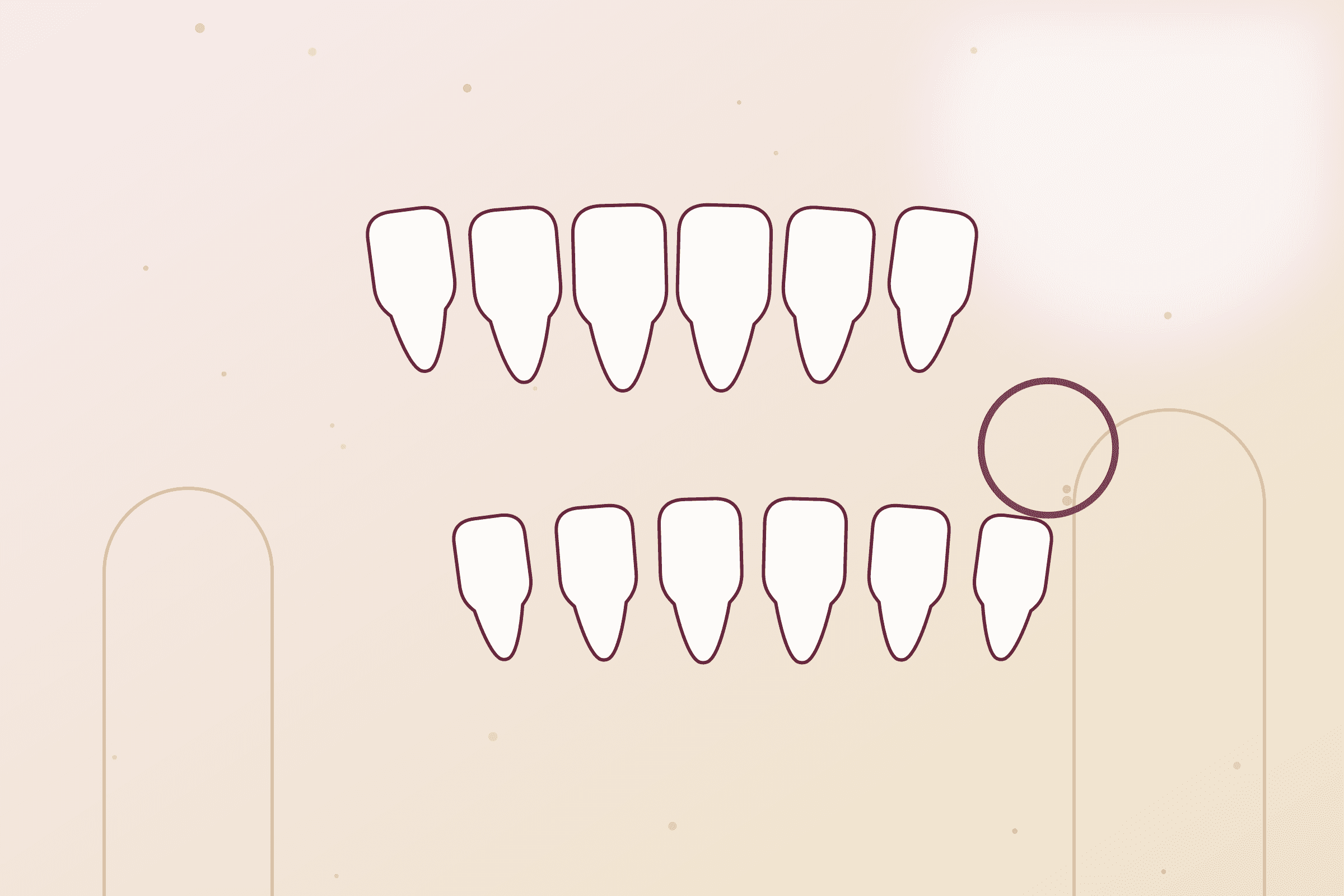
Short answer: a crossbite means the upper back teeth close inside the lower teeth. Normally the upper teeth slightly overlap the lower teeth from the outside. The most common cause is a narrow upper jaw. In children a crossbite is often accompanied by the lower jaw shifting to the side, and if not corrected in time it can lead to asymmetric growth. During growth the upper jaw can be widened with a special appliance.
Parents rarely notice a crossbite themselves because it is not in the front teeth but at the sides. Sometimes the only sign is the child’s jaw shifting to one side or a slight facial asymmetry. In this article I explain what a crossbite is and when and how it is treated.
How it is recognised
- When the teeth are closed, on one or both sides the upper back teeth sit inside the lower teeth
- The midline of the lower jaw is shifted sideways relative to the upper jaw
- The jaw slides to one side when opening and closing the mouth
- A slight asymmetry of the face, especially the chin
- The child chews on one side only
Causes
The most common cause is a narrow upper jaw. Heredity, long-lasting thumb or dummy sucking, habitual mouth breathing and a low tongue position can contribute. A meta-analysis shows that a long-lasting sucking habit is associated with posterior crossbite. More: thumb sucking and teeth and mouth breathing and the bite.
Why not wait
With a one-sided crossbite the child slides the lower jaw to one side to close the teeth. If this lasts a long time, the jaw may also grow asymmetrically. In addition, because the suture of the upper jaw is more flexible in childhood, expansion is easier and more effective at this stage. After growth is complete the same problem may need more complex treatment.
Expansion appliances
| Appliance | How it works | Note |
|---|---|---|
| Fixed screw expander | Sits in the palate; a parent turns the screw at home as instructed | The child cannot remove it, the result is predictable |
| Quad-helix | Wire springs along the palate gradually push the side teeth outwards | Activated by the orthodontist |
| Removable plate | A plate with a screw, worn at home | Depends on the child wearing it regularly |
After expansion is complete the appliance stays in place for a while so that the new bone consolidates. Then, if needed, we move on to a short phase of braces. The details of the process are on the palatal expansion page.
How expansion goes
- Examination, photographs, models and the necessary X-rays
- The appliance is fitted to the teeth
- I teach the parent how to turn the screw
- Regular check-ups over a few weeks
- Expansion is stopped and the appliance stays in for consolidation
- The appliance is removed and the result is monitored
Crossbite in adults
In adults the suture of the upper jaw closes, so classic expansion is limited. Small crossbites can be corrected by changing the angle of the teeth, while for a large skeletal narrowing mini-screw supported expansion or a surgical approach is discussed.
Crossbite of the front teeth
A crossbite does not only occur in the back teeth. Sometimes one or two front teeth close behind the lower teeth. This is usually linked to a disturbed eruption path, and if not corrected in time it puts extra load on the lower tooth, the gum can be damaged and the tooth can wear. This type of crossbite is often corrected with a simple appliance or short treatment. If the lower jaw itself sticks out, that is a different problem: when the lower jaw sticks out.
How to check at home
- Ask your child to bite together and smile
- Look from the sides: do the upper teeth overlap the lower teeth from the outside
- Are the middle of the upper and lower front teeth in one line
- When the child slowly opens and closes the mouth, does the jaw slide to the side
This check is not a diagnosis, but if there is any doubt it is a good reason not to delay an examination.
What the science says
- Cochrane review (2021): different appliances for treating posterior crossbite have been compared. Some evidence suggests the quad-helix may be more effective than removable expansion plates, but the certainty of evidence is low to moderate.
- Meta-analysis (2016): a long-lasting sucking habit is associated with a higher risk of posterior crossbite.
A crossbite itself may not be visible. But its effect on jaw growth becomes very visible years later.
If you suspect a crossbite, book a visit. More about orthodontics for children: orthodontics for children.
Frequently asked questions
Is expansion painful?
When the screw is turned there is a short feeling of pressure in the teeth and around the nose. The discomfort is usually mild and passes quickly.
Does the appliance affect speech?
It may a little in the first days; children usually get used to it quickly.
Does the crossbite come back after expansion?
If the appliance stays in long enough for consolidation and the causing habit has been eliminated, the risk is lower. That is why we monitor afterwards.
At what age is expansion best?
Often in the mixed dentition, roughly between ages 6 and 10. We determine the exact time after the examination.
Does a crossbite cause facial asymmetry?
In a one-sided crossbite, if the lower jaw shifts to the side for a long time, growth may become asymmetric. That is why timely treatment matters.
Related service
Scientific sources
The information in this article is based on the following peer-reviewed scientific articles and systematic reviews.
- Ugolini, A., Agostino, P., Silvestrini-Biavati, A., Harrison, J. E., & Batista, K. B. (2021). Orthodontic treatment for posterior crossbites. Cochrane Database of Systematic Reviews, 12(12), CD000979. [PMID: 34951927] | [DOI: 10.1002/14651858.CD000979.pub3]