Thumb sucking and dummies: when do they harm the teeth
Up to what age it is normal, which bite problems it causes, how to stop the habit gently and which methods the Cochrane review supports.

AuthorDr. Fidan AliyevaOrthodontist, Pitts Masters graduate
Short answer: in infancy sucking a thumb or a dummy is normal and soothes the child. The problem starts when the habit lasts a long time, especially after age 3-4. According to a meta-analysis, a long-lasting sucking habit is associated with open bite, posterior crossbite and prominent upper teeth. If the habit stops before the permanent teeth come in, some of these changes may improve on their own.
Parents are often caught between two extremes: either they wait, saying "it will pass", or they scold the child. Neither usually helps. In this article I explain how the habit affects the teeth, when to worry and how to stop it gently.
Up to what age it is normal
| Age | Situation | What to do |
|---|---|---|
| 0-2 years | A natural reflex and way of soothing | No need to worry |
| 2-3 years | Should gradually decrease | Start reducing it gently |
| After 3-4 years | Risk of affecting the bite increases | Help stop the habit, orthodontic check |
| When permanent teeth come in | Changes may not correct themselves | An orthodontic check is a must |
How it affects the teeth
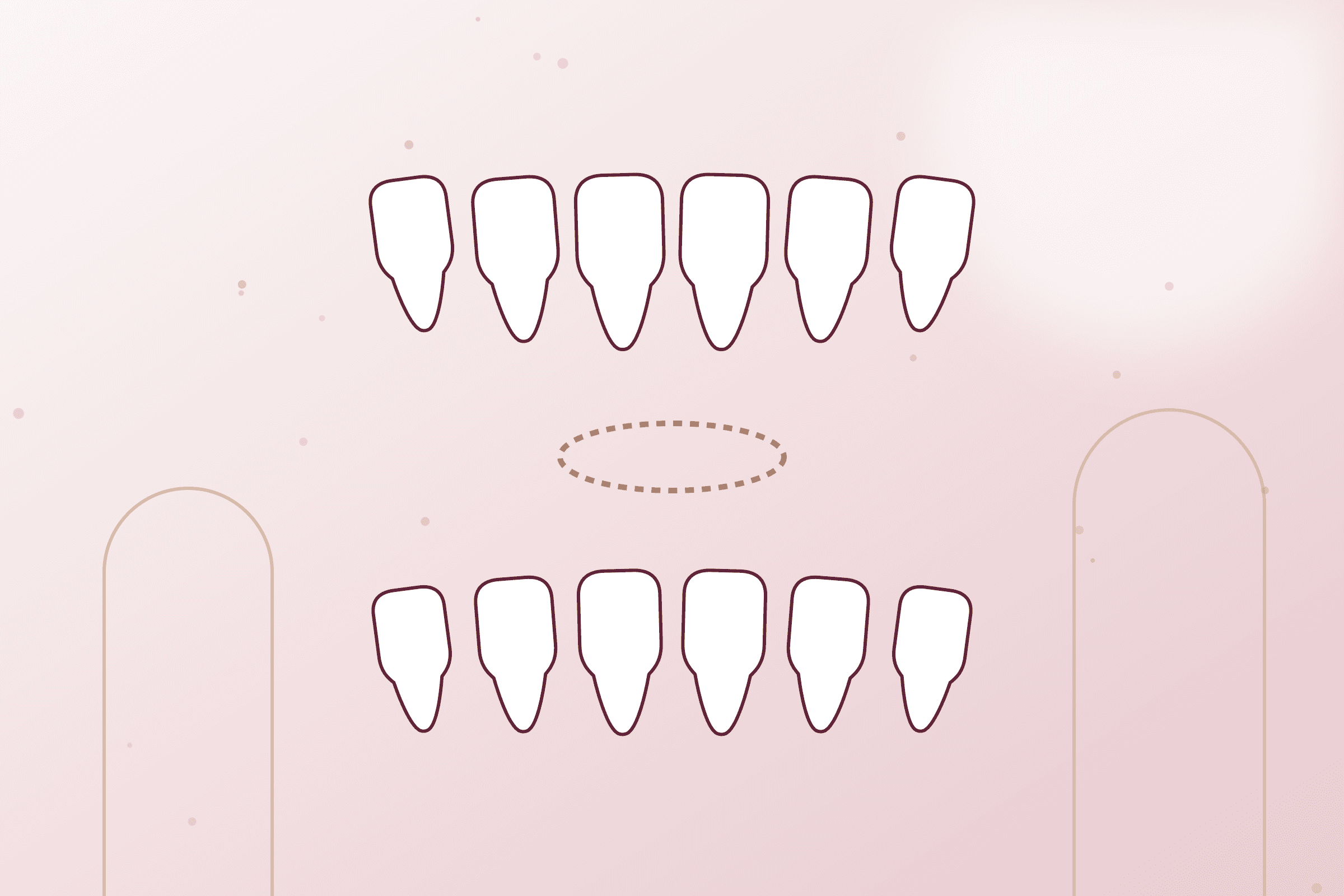
The thumb or dummy sits between the front teeth and prevents them from erupting. At the same time the cheek muscles squeeze the upper jaw from the sides during sucking, and the tongue stays low. As a result several changes can happen:
- The front teeth do not meet, that is an open bite. See: open bite
- The upper jaw narrows and the back teeth bite the wrong way. See: crossbite
- The upper front teeth stick out and the lower teeth tip inwards
- An effect on the pronunciation of some sounds
The size of the effect depends on how long the habit has lasted, how many hours a day it continues and how the thumb is held. A habit that lasts all night has more effect than short episodes during the day.
How to stop the habit
- Talk to your child: explain what the habit does to the teeth in a way suited to their age
- Praise and reward: mark the days without sucking on a calendar
- Look for the trigger: keep the hands busy when the child is tired, bored or anxious
- Do not scold or shame: this makes the child continue the habit in secret
- At night a soft glove or bandage can serve as a reminder
- If these methods do not help, an orthodontist may suggest a reminder appliance
At the orthodontic check I talk to the child directly. Sometimes showing the child a model of their teeth and explaining what is happening works better than months of a parent talking. When a child understands the meaning and feels heard, they take part in the process more easily.
Is a dummy better than a thumb
A dummy has one advantage: it is easier to take away gradually than a thumb. But with long-term use its effect on the bite is similar to thumb sucking. That is why it is recommended to reduce dummy use gradually around age 2-3 too.
After the habit stops
If the habit stops early, an open bite often improves within a few months. A narrowed upper jaw and crossbite, however, usually do not correct themselves and may need palatal expansion. That is why an orthodontic check is needed even after the habit stops.
Myths and facts
| Belief | Fact |
|---|---|
| The habit will pass on its own, no need to worry | It passes in many children, but if it continues after 3-4 the risk to the bite increases |
| A dummy is completely harmless compared with a thumb | With long-term use the effect is similar, it is just easier to take away |
| Bitter nail polish and scolding work best | Positive motivation and the child’s own agreement give a more lasting result |
| Once the habit stops, the bite always corrects | An open bite often improves, a narrow jaw usually does not |
Approach by age
| Age | What helps |
|---|---|
| 2-3 years | Gradually keep the dummy only for sleep, then take it away completely |
| 3-5 years | Conversation, a reward calendar, stories and games |
| 5-7 years | The child’s own decision, the orthodontist’s explanation, reminders |
| After 7 years | Orthodontic check, a reminder appliance and bite treatment if needed |
What the science says
- Meta-analysis (2016): non-nutritive sucking is associated with open bite, posterior crossbite and Class II bite.
- Cochrane review (2015): orthodontic reminder appliances and psychological approaches such as positive reinforcement help stop the habit. The certainty of evidence is low.
The strongest tool against a habit is not punishment but the child’s own agreement.
If your child still sucks a thumb or dummy after age 3-4, book a visit. More: orthodontics for children.
Frequently asked questions
My child sucks a thumb only in sleep. Is that harmful too?
Yes, a habit that lasts all night continues for many hours and can affect the bite in particular.
Is a reminder appliance painful?
No. It simply prevents the thumb from touching the palate and reminds the child of the habit. The first days take getting used to.
Does nail biting affect the teeth too?
It can cause wear of the edges of the front teeth and sometimes shifting. Its effect on the bite is not as strong as thumb sucking.
What if the permanent teeth have already come in?
Stopping the habit is still important, but the changes in the bite may not correct themselves. An orthodontic check is needed.
What if the habit is linked to stress?
Sometimes the habit gets stronger during anxiety. In that case it helps to find other ways for the child to calm down and, if needed, to consult a child psychologist.
Related service
Scientific sources
The information in this article is based on the following peer-reviewed scientific articles and systematic reviews.
- Doğramacı, E. J., & Rossi-Fedele, G. (2016). Establishing the association between nonnutritive sucking behavior and malocclusions: A systematic review and meta-analysis. Journal of the American Dental Association, 147(12), 926-934.e6. [PMID: 27692622] | [DOI: 10.1016/j.adaj.2016.08.018]
- Borrie, F. R., Bearn, D. R., Innes, N. P., & Iheozor-Ejiofor, Z. (2015). Interventions for the cessation of non-nutritive sucking habits in children. Cochrane Database of Systematic Reviews, 2015(3), CD008694. [PMID: 25825863] | [DOI: 10.1002/14651858.CD008694.pub2]