Orthodontics for adults: is it too late?
How orthodontic treatment works in adults, how it differs from children, the role of gums and bone, multidisciplinary planning and the scientific evidence.

AuthorDr. Fidan AliyevaOrthodontist, Pitts Masters graduate
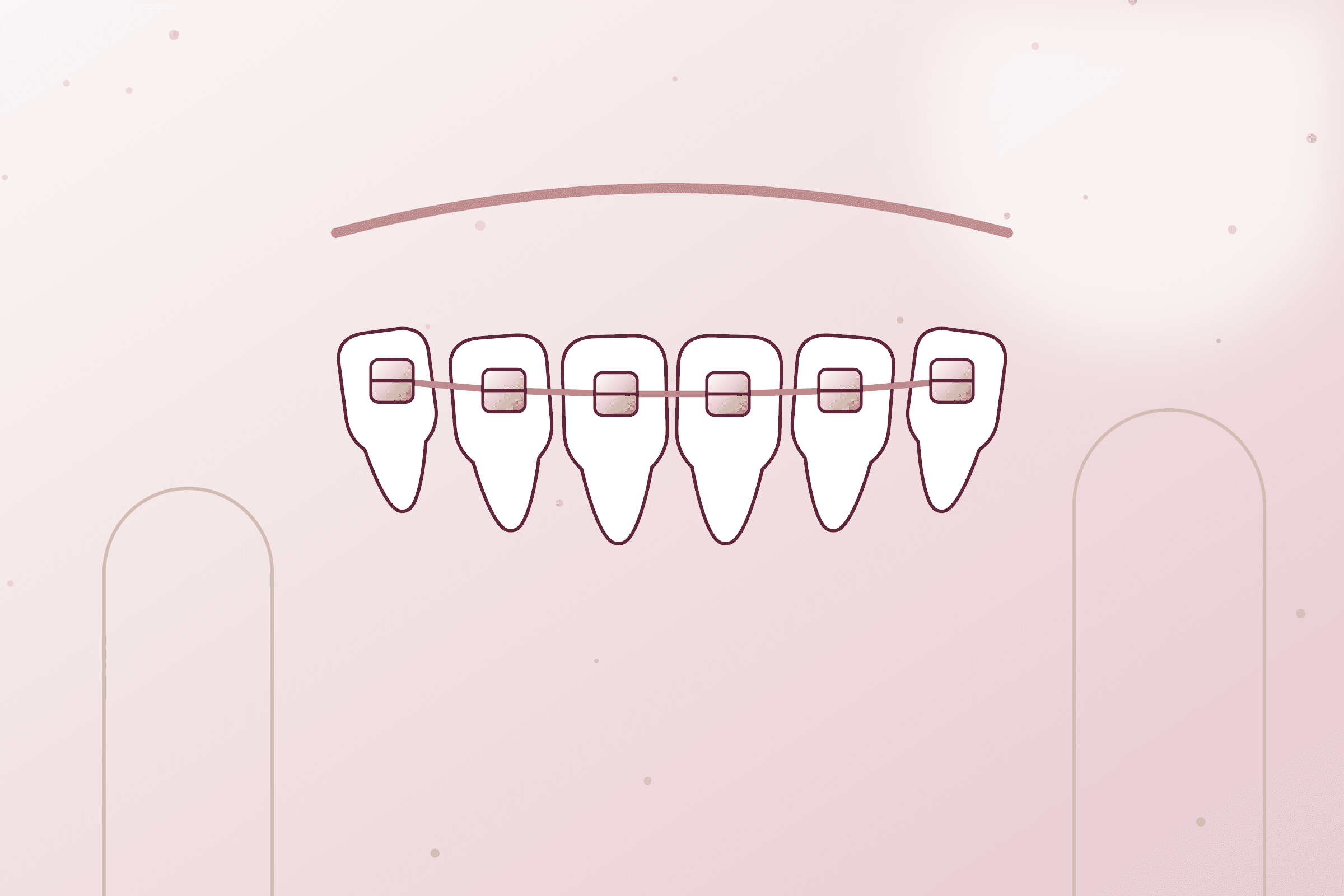
Short answer: teeth can move at any age, so there is no age limit for orthodontic treatment. The main condition is healthy gums and bone. In adults the jaws no longer grow, so some skeletal problems are solved in other ways. Treatment is often planned together with other dentists: to bring the teeth into the right position before an implant, prosthesis or aesthetic restoration.
Most adults who come for a consultation start with "maybe it is too late for me?" My patients include people in their twenties as well as older people. In this article I explain the specifics of orthodontics in adults and what we need to pay attention to.
Why adults come
- There was no chance of treatment in childhood
- The teeth have moved again after previous treatment. See: orthodontic retreatment
- Teeth need to be prepared before an implant, prosthesis or veneers
- Crowding or spacing of the front teeth with age
- A smile that does not suit the face
- The effect of the bite on function and tooth wear
The difference from children
| Children | Adults | |
|---|---|---|
| Growth | Jaw growth can be used | Growth is complete, skeletal differences are solved in other ways |
| Gums and bone | Usually healthy | There may be gum disease and bone loss |
| Restorations | Few | Fillings, crowns, implants, missing teeth |
| Team | Mostly the orthodontist | Often a periodontist, prosthodontist, general dentist, surgeon |
| Aesthetic demand | Varies | More interest in invisible treatment |
Gums and bone come first
In adults I always check the condition of the gums and bone before treatment. During active gum disease, moving teeth can speed up bone loss. So when needed a periodontist treats the gums first and then we move on to the orthodontic phase. We also monitor the gums during treatment.
Gum recession
Patients sometimes ask: "Do braces cause the gums to recede?" According to a systematic review, the evidence on this is not conclusive. In some studies excessive forward tipping of the front teeth was associated with gum recession, in others no link was found. That is why I try to move the teeth within the limits of the bone and to be especially careful where the gum is thin.
Planning as a team
In adults orthodontic treatment is often part of a larger plan. For example, before an implant for a missing tooth we open space of the right size and bring the neighbouring teeth into the right position. Then the prosthodontist or general dentist completes the aesthetics and function. In one patient with missing lateral incisors we first restored the space they needed and then set the position of the teeth correctly. More: missing teeth.
Which method
Adults often want invisible treatment: ceramic braces or aligners. Both methods have their place. We choose according to which movements the teeth need. More: braces or aligners.
Duration and comfort
Treatment in adults does not always take long. Duration depends mainly on the complexity of the case. According to a systematic review, treatment with braces takes about 20 months on average. For those with a busy work and travel schedule we plan visits in advance. More: patients living abroad.
Wisdom teeth and the jaw joint
Two questions adults often ask: do wisdom teeth need to be removed, and do braces harm the jaw joint. I wrote about both separately: wisdom teeth and braces and orthodontics and the jaw joint.
Myths and facts
| Belief | Fact |
|---|---|
| After 30 the teeth do not move | Teeth can move at any age; the main condition is healthy gums and bone |
| Treatment in adults always takes long | Duration depends mainly on the complexity of the case |
| Braces get in the way of working life | Ceramic braces and aligners are almost invisible |
| Braces cannot go on filled or crowned teeth | They can, with special bonding methods |
What to bring to the consultation
- A recent panoramic X-ray if you have one
- Records and photographs of previous orthodontic treatment
- The prosthodontist’s notes if an implant or prosthesis is planned
- The periodontist’s report if you have had gum treatment
- Information about your travel and work schedule
What the science says
- Systematic review (2010): evidence on the link between orthodontic treatment and gum recession is not conclusive; excessive forward tipping of the front teeth may be a risk factor.
- Systematic review (2016): the average duration of treatment with braces is about 20 months.
It is not too late for a beautiful smile. The plan just needs to be more careful.
To find out your treatment options, book a consultation. More: braces treatment and aligners.
Frequently asked questions
Can a tooth with an implant be moved?
No, an implant fuses with the bone and does not move. But the other teeth can be moved, and sometimes we use the implant as an anchor.
Can braces be bonded to crowned teeth or veneers?
Yes, with special bonding methods. Sometimes it makes more sense to renew the aesthetic restoration after orthodontic treatment.
Is retention longer in adults?
Retention matters at any age. In adults, especially with gum and bone loss, a fixed retainer is often preferred.
I have gum disease. Can I have treatment?
Often yes, once the disease is under control. We plan together with a periodontist and monitor during treatment.
Related service
Scientific sources
The information in this article is based on the following peer-reviewed scientific articles and systematic reviews.
- Joss-Vassalli, I., Grebenstein, C., Topouzelis, N., Sculean, A., & Katsaros, C. (2010). Orthodontic therapy and gingival recession: a systematic review. Orthodontics & Craniofacial Research, 13(3), 127-141. [PMID: 20618715] | [DOI: 10.1111/j.1601-6343.2010.01491.x]
- Tsichlaki, A., Chin, S. Y., Pandis, N., & Fleming, P. S. (2016). How long does treatment with fixed orthodontic appliances last? A systematic review. American Journal of Orthodontics and Dentofacial Orthopedics, 149(3), 308-318. [PMID: 26926017] | [DOI: 10.1016/j.ajodo.2015.09.020]